Yuki Kihara Exhibitions
Artworks
_(2026)_FRONT.jpg?i=110309)
_(2026)_BACK.jpg?i=110307)
Yuki Kihara, Dresstories V (O.002280), 2026, printed calico, crinoline, bolster, mannequin [front and back view]
edition 2/2 + 1 AP, size: 1525 x 1440 x 1260 mm
_(2026)_FRONT.jpg?i=110304)
_(2026)_BACK.jpg?i=110308)
Yuki Kihara, Dresstories III (O.002295), 2026, printed calico, crinoline, bolster, mannequin [front and back view]
edition 1/2 + 1 AP, size: 1525 x 1440 x 1260 mm
_(2026)_FRONT.jpg?i=110311)
_(2026)_BACK.jpg?i=110306)
Yuki Kihara, Dresstories II (O.002283), 2026, printed calico, crinoline, bolster, mannequin [front and back view]
edition 1/2 + 1 AP, size: 1525 x 1440 x 1260 mm
_(2026)_FRONT.jpg?i=110310)
_(2026)_BACK.jpg?i=110305)
Yuki Kihara, Dresstories IV (O.002288), 2026, printed calico, crinoline, bolster, mannequin [front and back view]
edition 1/2 + 1 AP, size: 1525 x 1440 x 1260 mm
_(2026)_FRONT.jpg)
_(2026)_BACK.jpg?i=110313)
Yuki Kihara, Dresstories I (O.002304), 2026, printed calico, crinoline, bolster, mannequin [front and back view]
edition 1/2 + 1 AP, size: 1525 x 1440 x 1260 mm
See Also
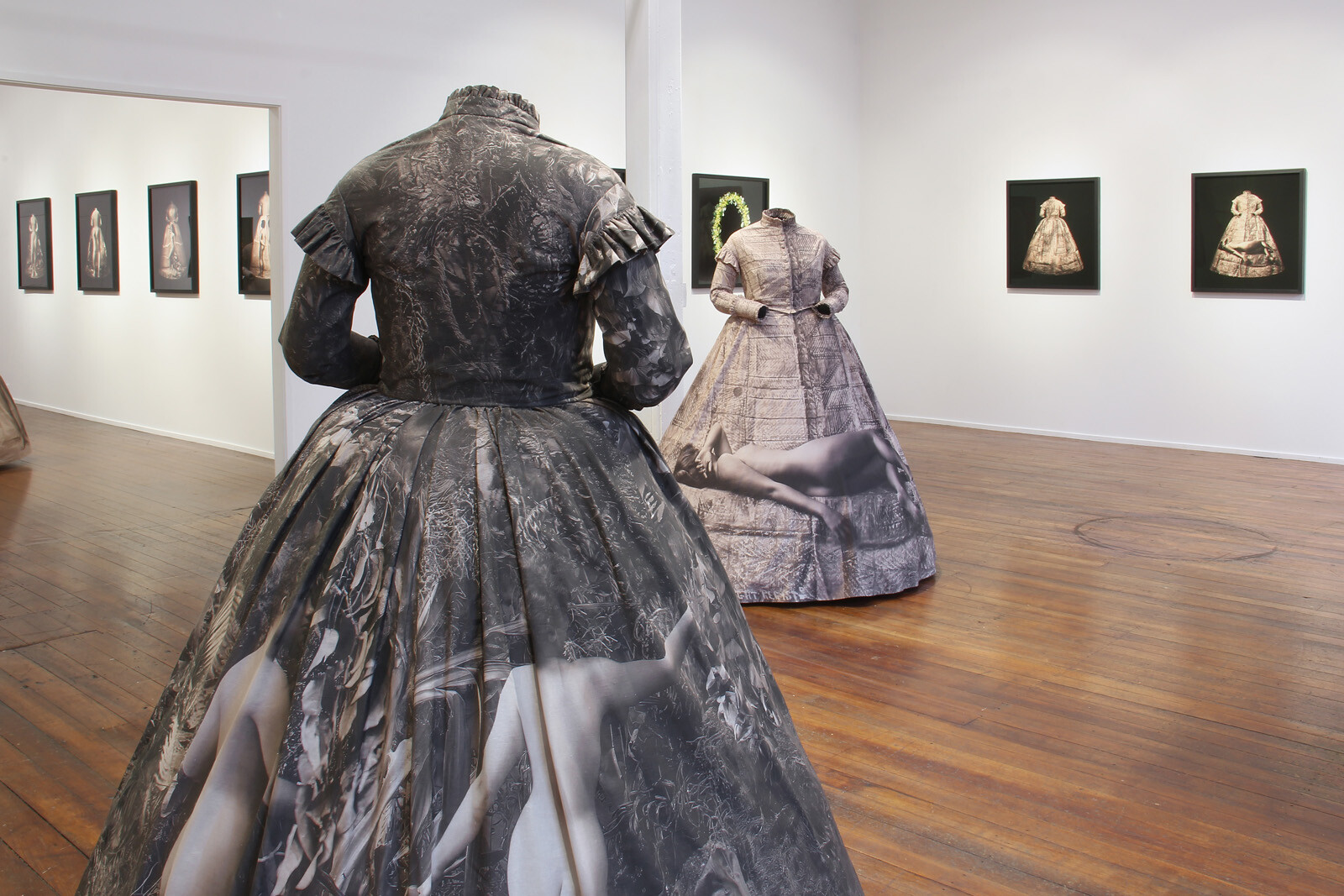
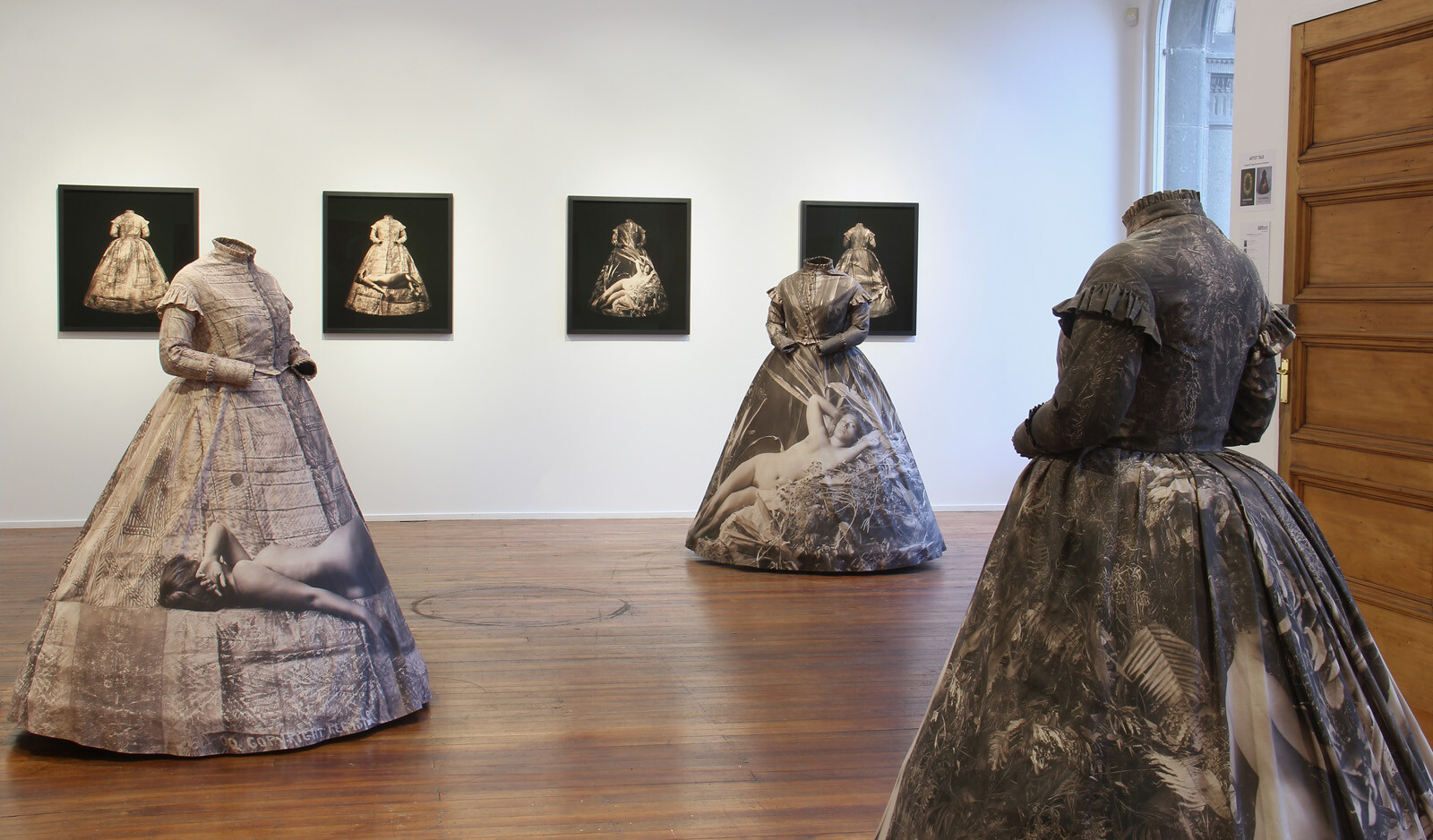
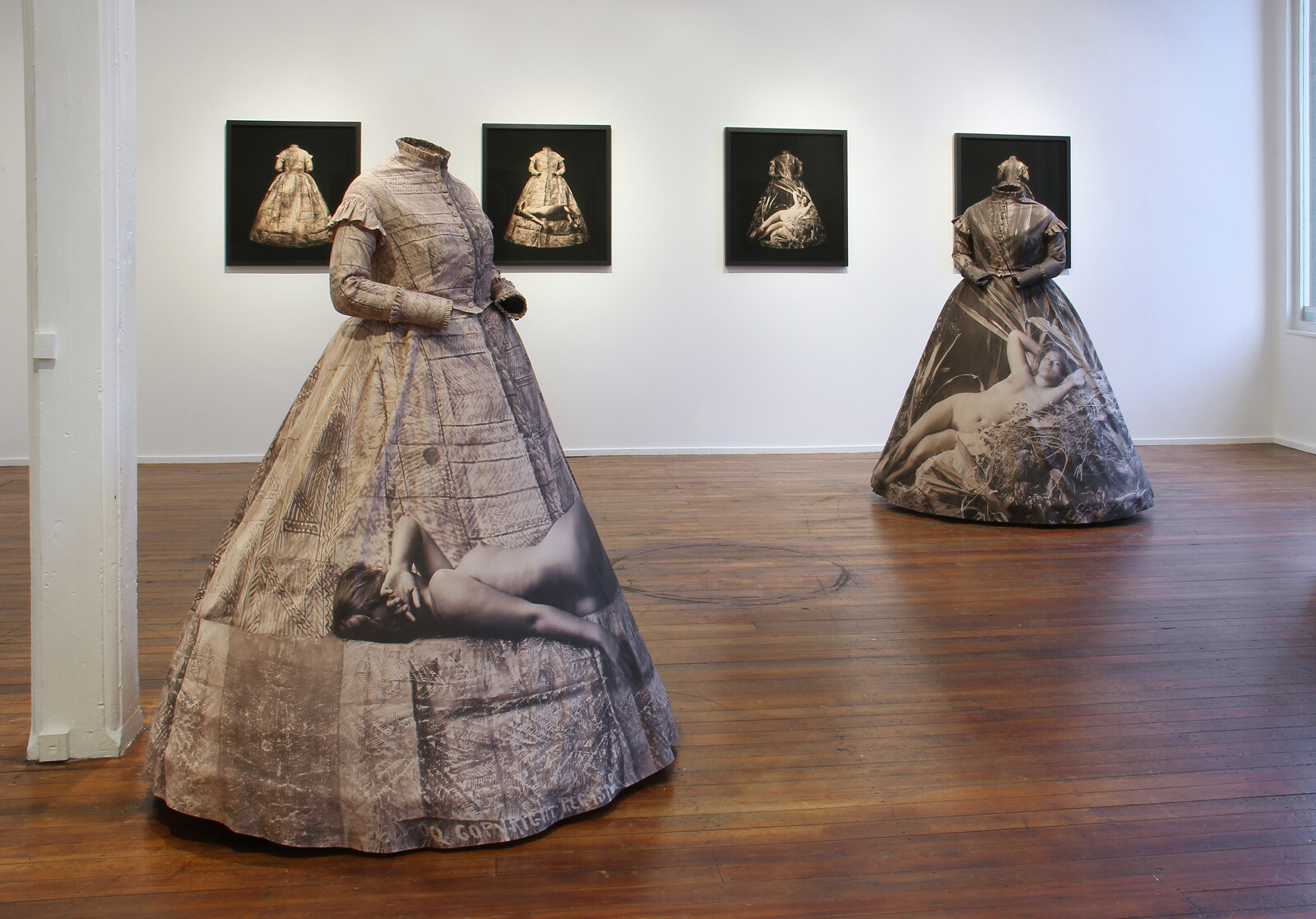
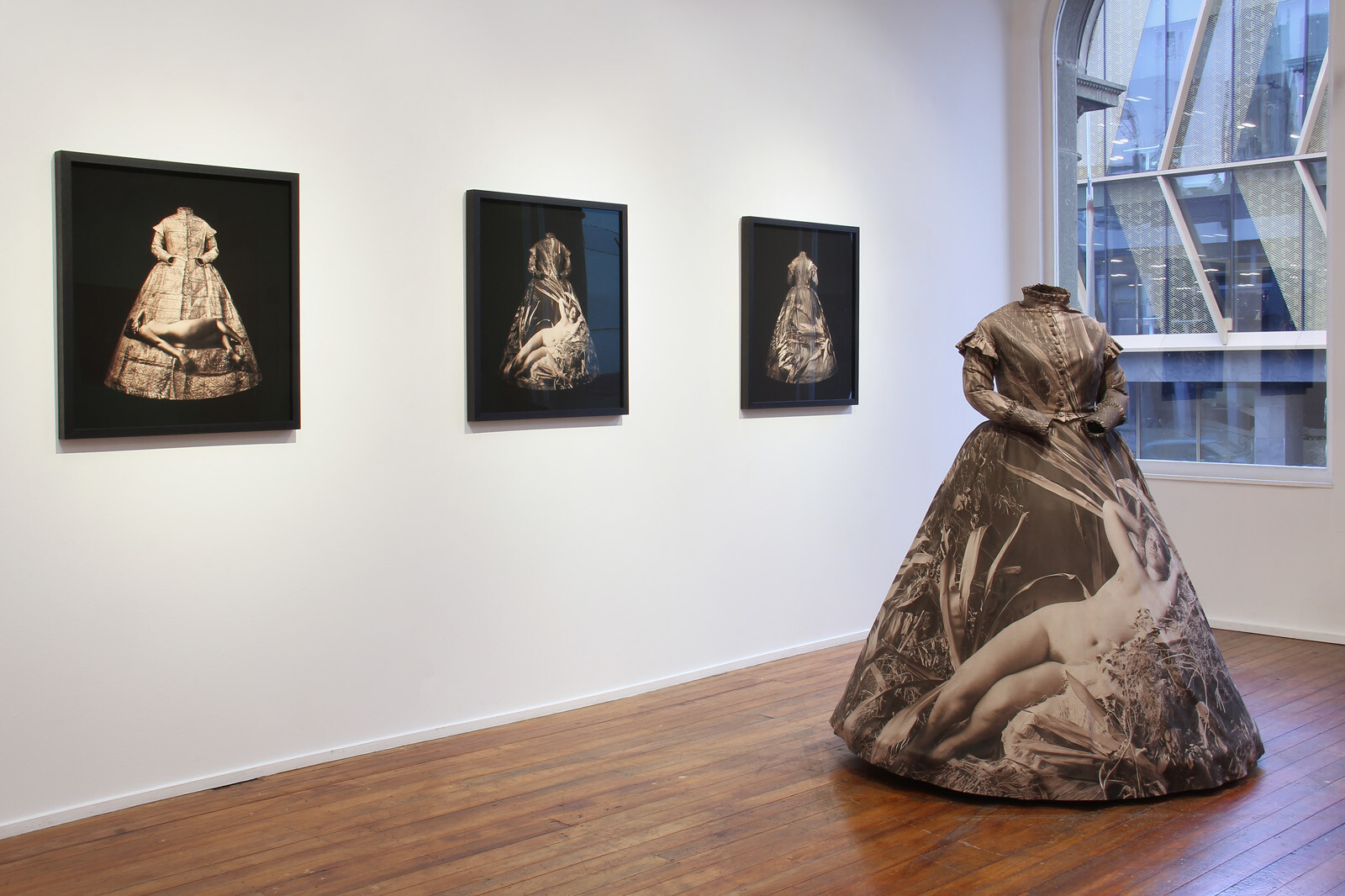
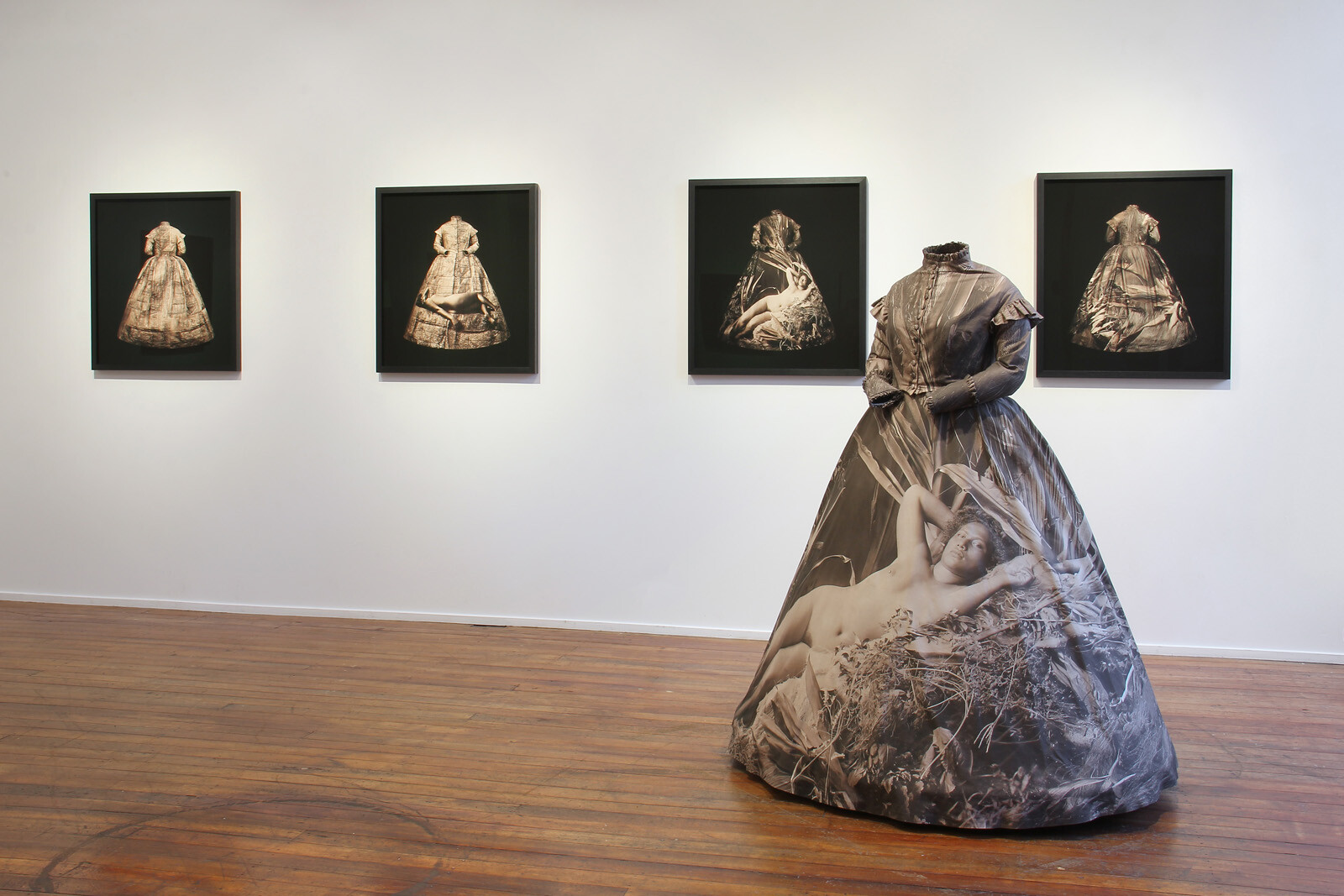
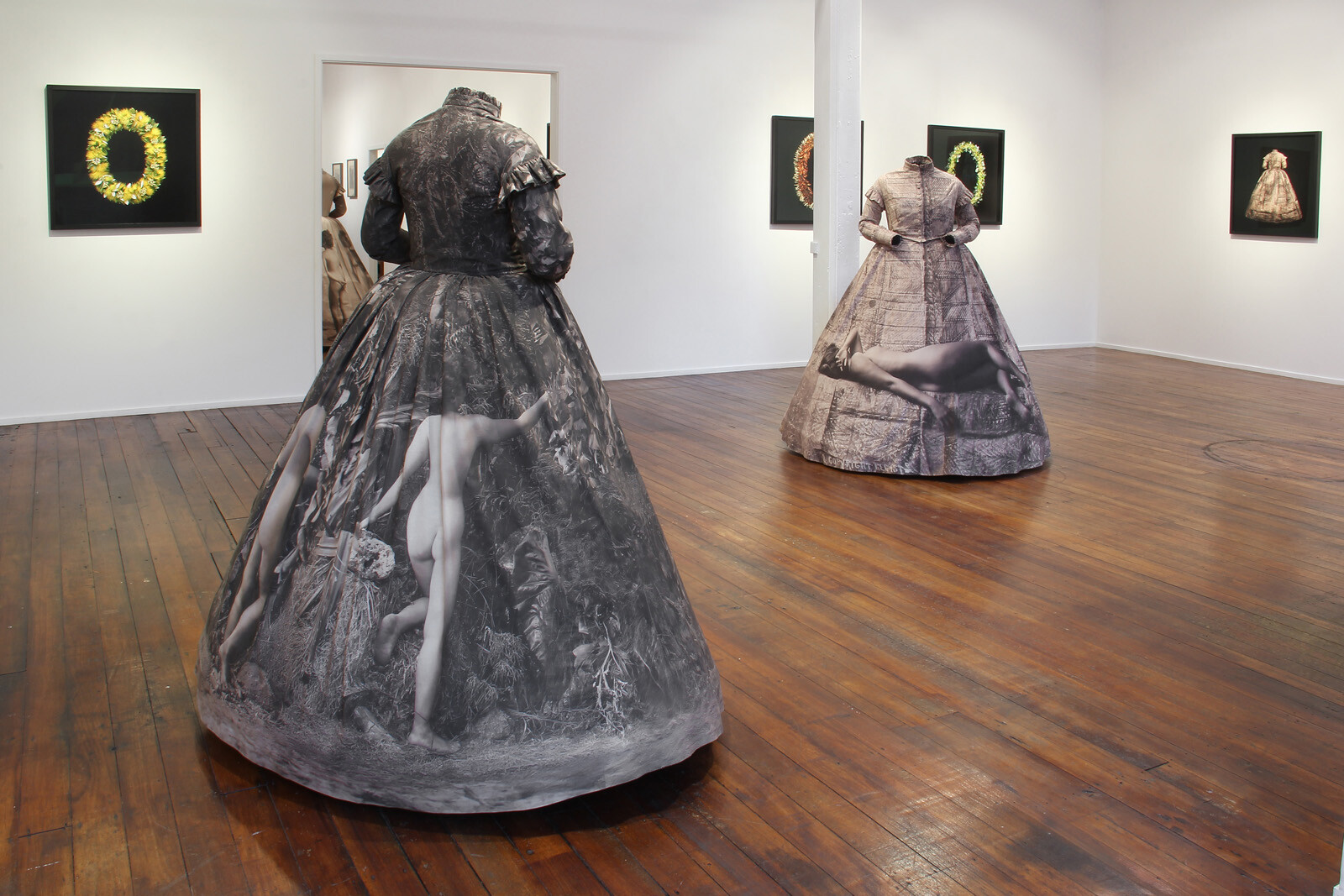
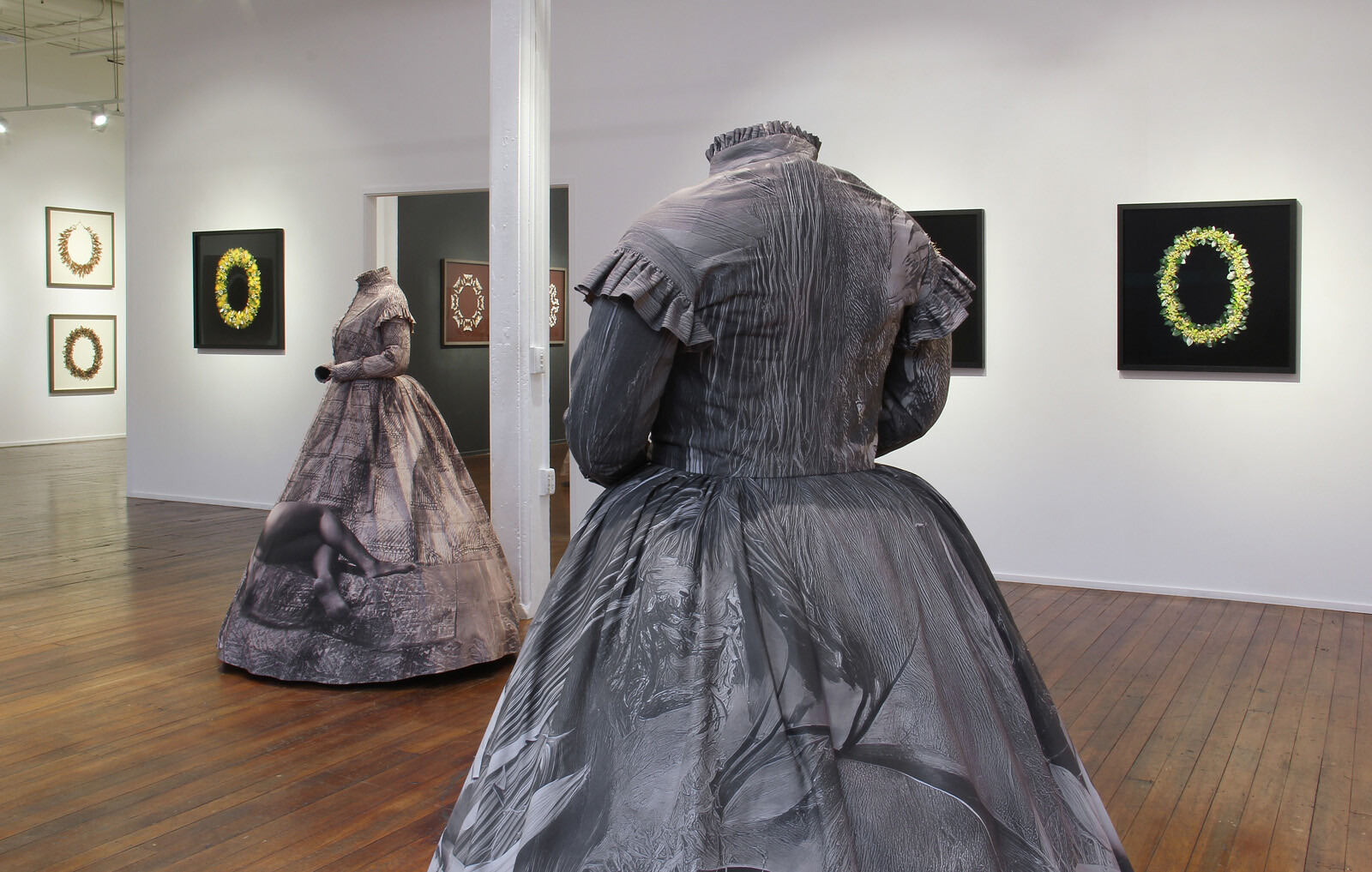
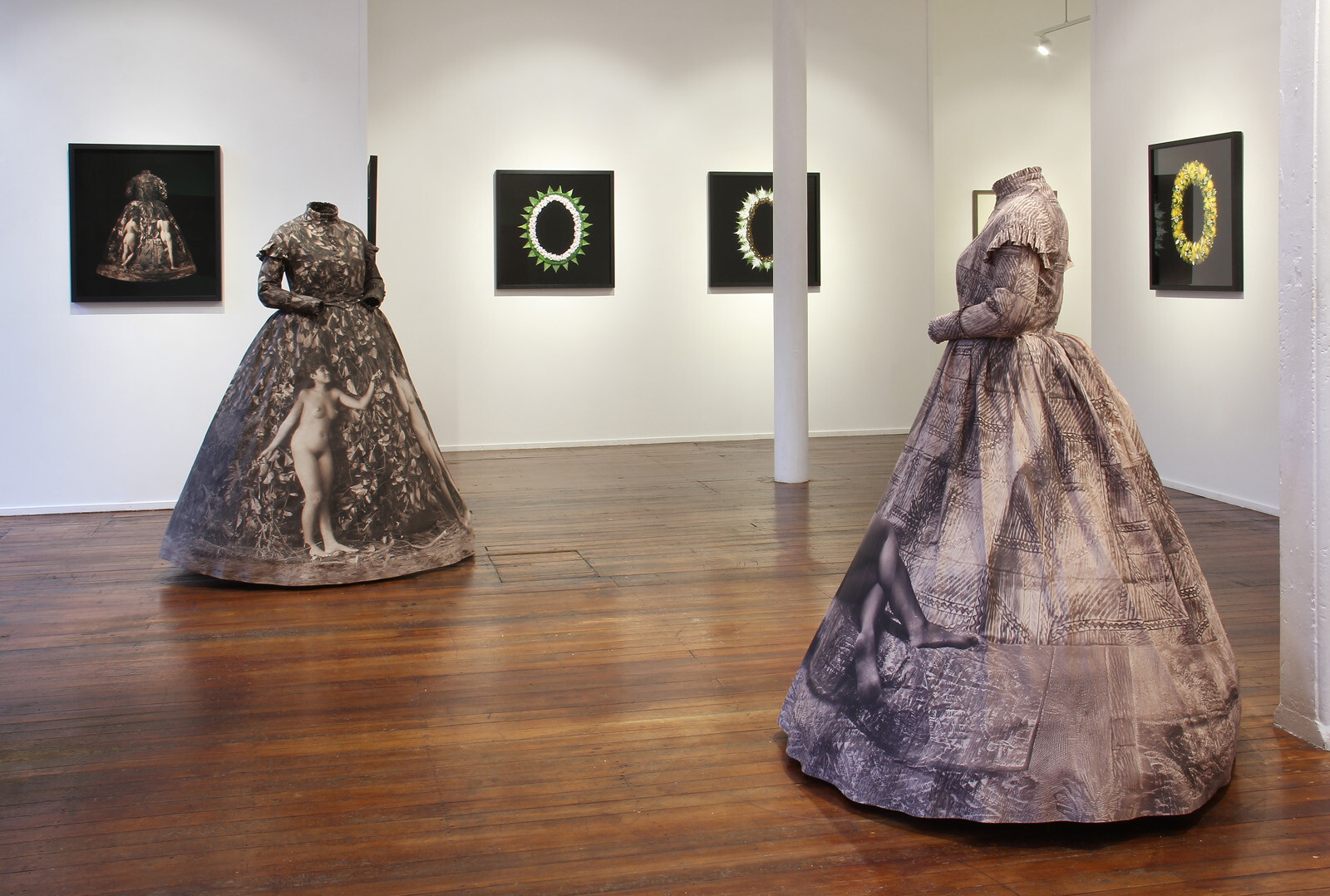
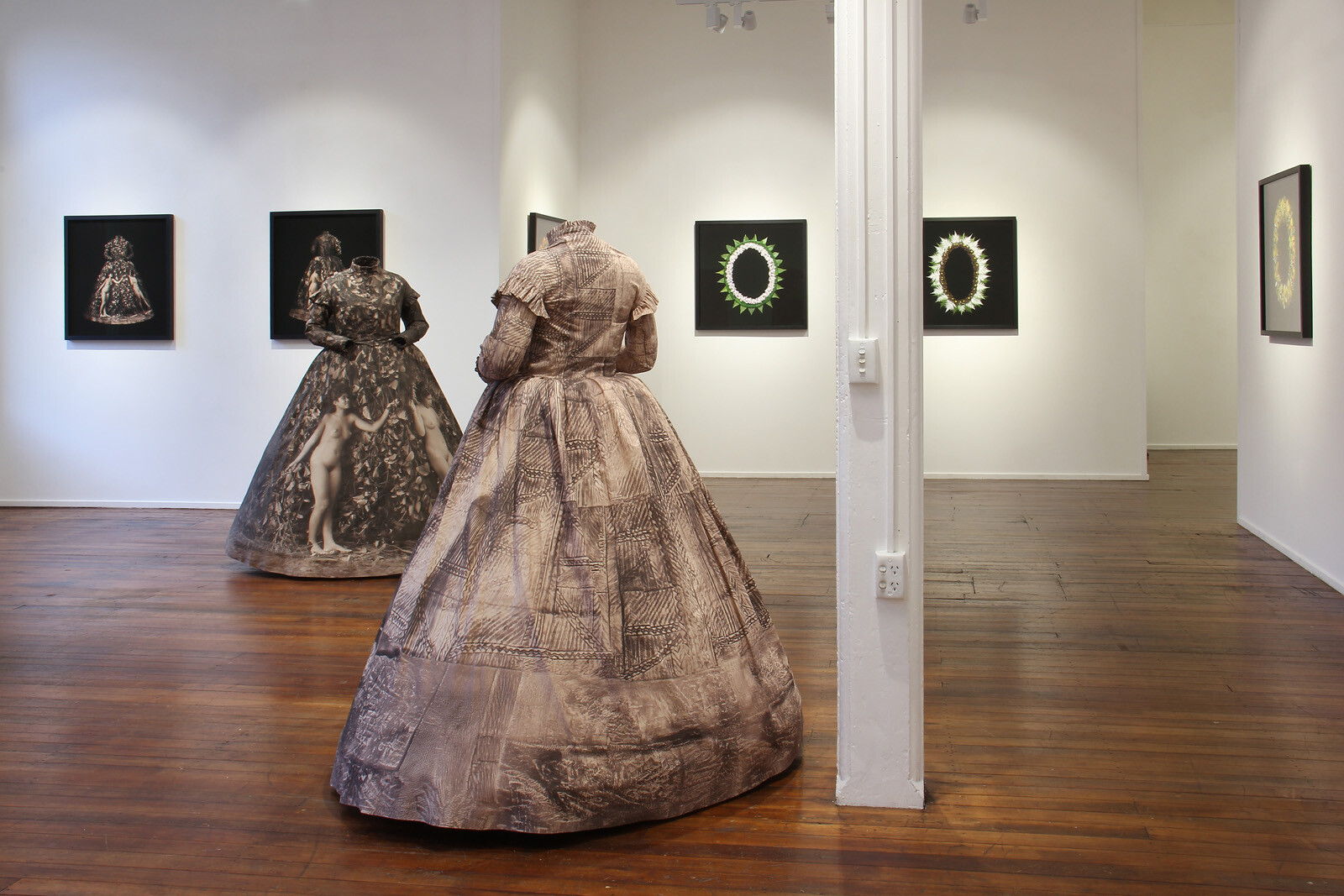
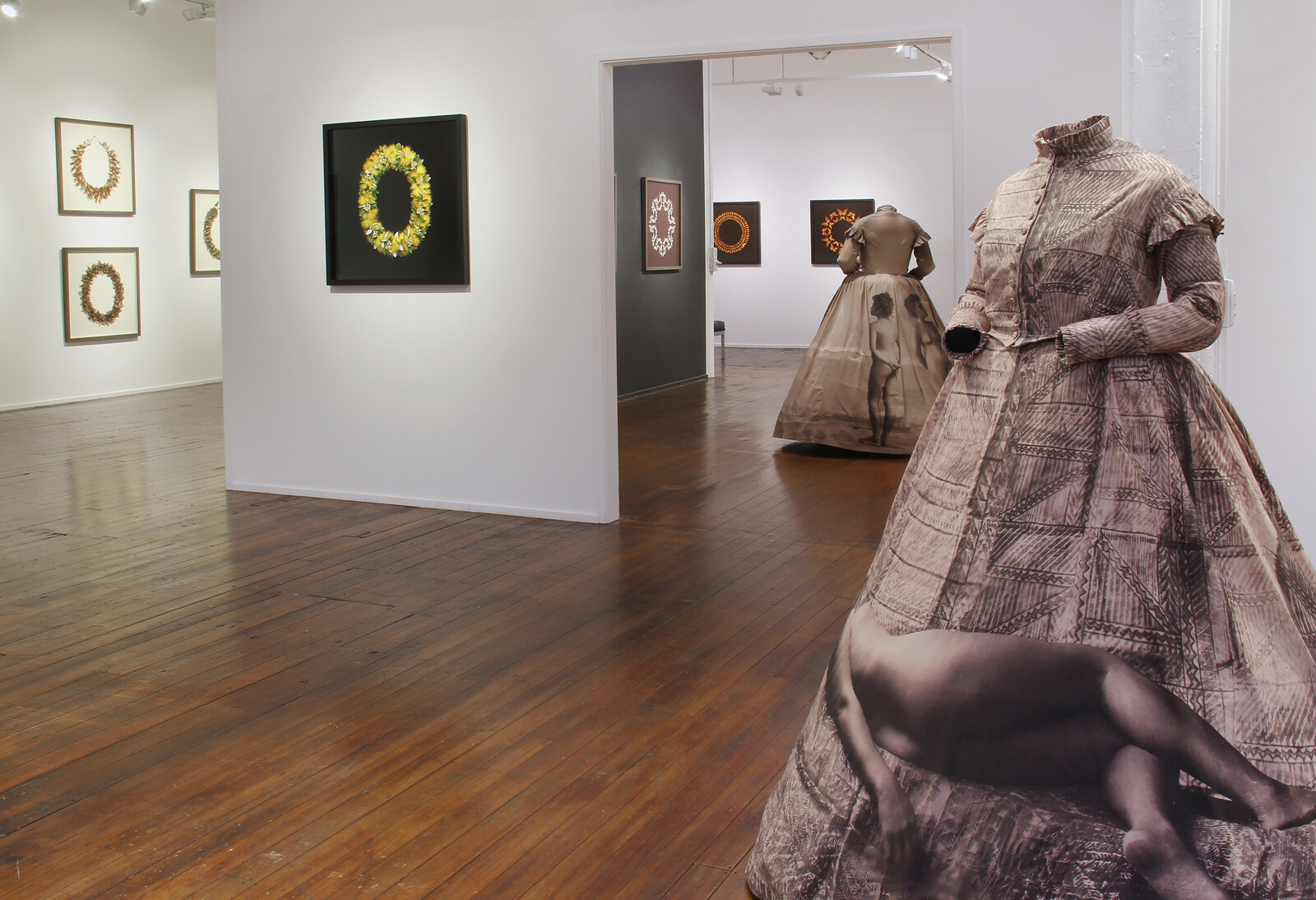
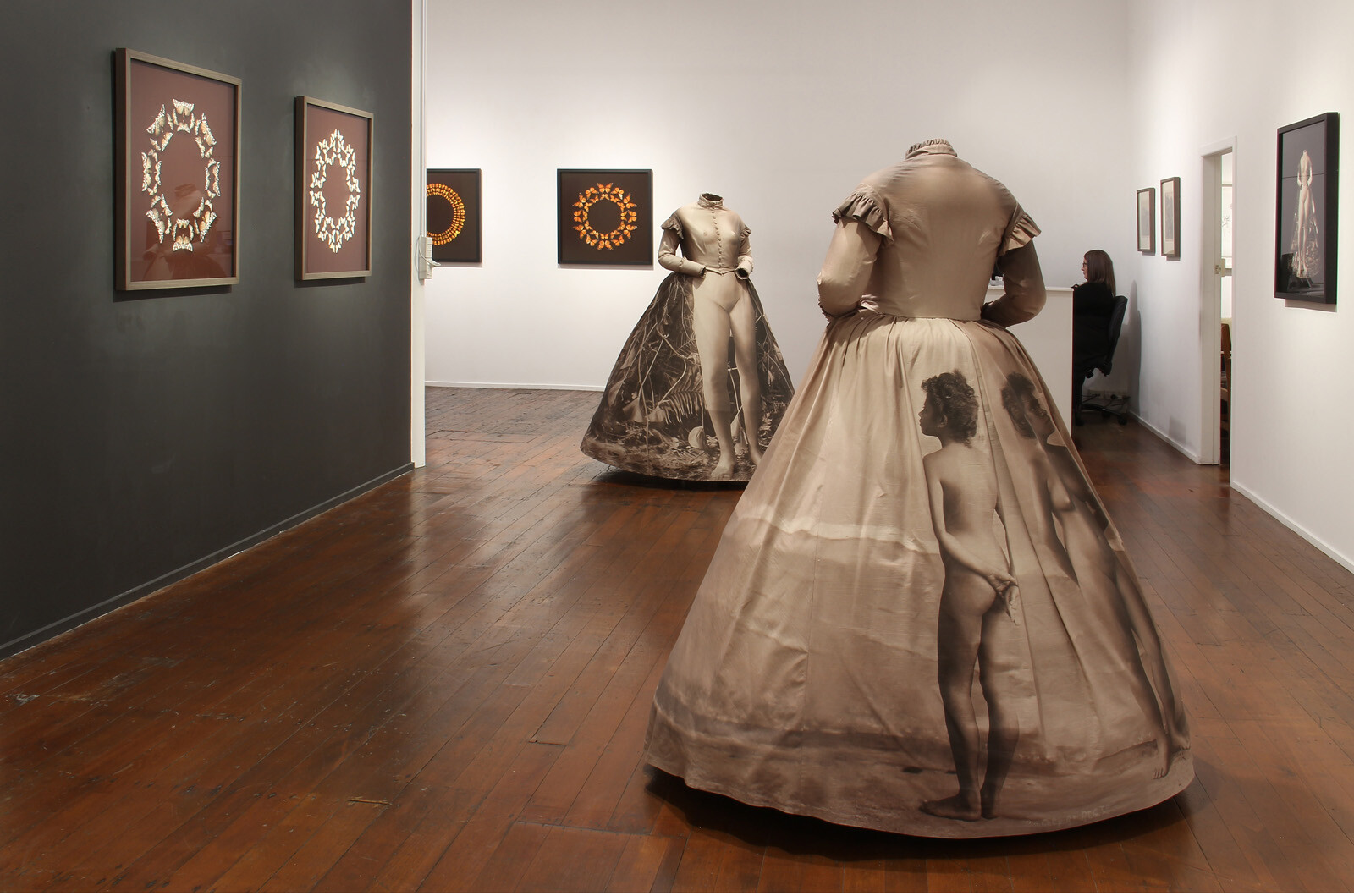
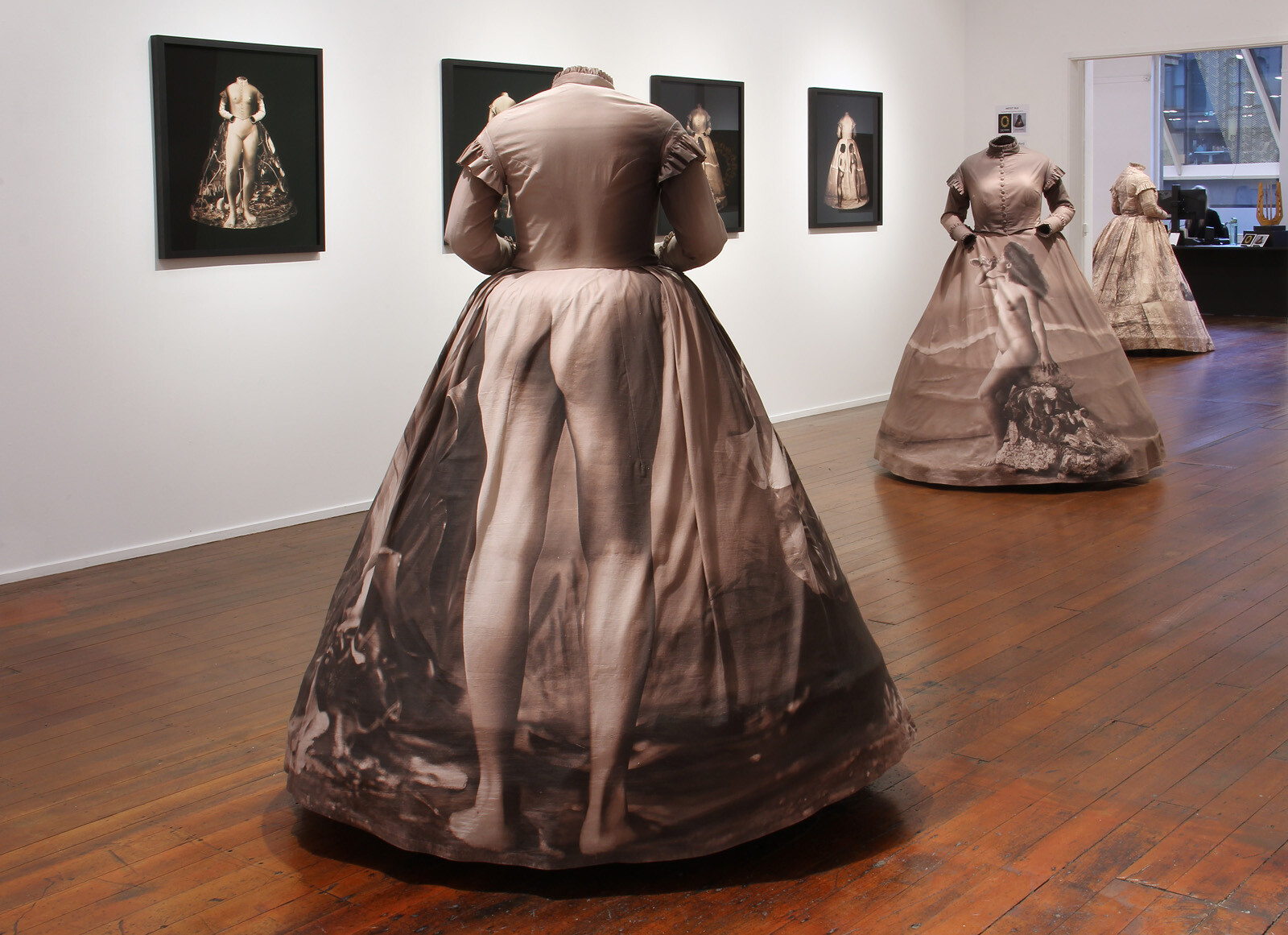
Dresstories consists of five full scale Victorian dresses presented on mannequins modelled on the artist's body. A set of limited edition framed photographs of the front and back of each dress is also available.
YOU ARE CURRENTLY VIEWING THE DRESSTORIES FULL SCALE DRESSES.
Artist Talk
Exhibition Text
Central in Yuki Kihara’s extensive and broadening, acclaimed, oeuvre as Kihara’s second-self, Salome and her distinctive Victorian mourning dress are delivered in Dresstories for the first time as five utterly compelling, disarming, clothed sculptures.
Traversing time and place, Salome’s plurality – like Walter Benjamin’s Angel of History – simultaneously explores and poses numerous questions including those of identity, colonial gaze, moral code, ethnography, perception, memory, power imbalance, and cultural norm.
Kihara uses “nude photographs of Samoan women taken by… Thomas Andrew (1855-1939)… The contrast between exposed skin and the modesty of mourning becomes a way to question… Each dress in the series acts as both a skin and a shield, asking questions about who gets to look, who is forced to reveal, and who holds the power to decide.”1
Kihara embeds the passage of time with her characteristic use of black and white photography with this then developing into a layered metaphor for history and memory. Salome also, carrying strong associations from biblical and art historical traditions, is resolutely tied to myth and moral debate. Kihara ensures Salome “challenges the idea of linear progress” thereby further questioning “how we remember… the past isn’t something static or far away but alive in the tensions of today.”2
Salome is also directly connected by Kihara to the Taualuga, a traditional Samoan dance that “…is deeply performative and layered with meaning… someone who dances to control and redefine how she’s seen, turning the tables on the narratives…” This linkage enables Kihara to explore ways “to reclaim, resist, and reshape power dynamics across cultures and histories.”3
The stark tonal beauty of Thomas Andrew sourced nudes placed in, outlined by and contrasted with background vignettes of landscape or bush and siapo (the barkcloth of Sāmoa) in these works establish remarkable narratives while building notable pictorial depth and uniquely Pacific environments as well as furthering new significant dialogues of place and identity. Although we never once see Salome’s face, her presence is always imagined, for every viewer feels the presence of her body and eyes upon them. The gaze in this manner has been turned. And as her unseen eyes look back so too does history itself as the conversation begun poses questions of us all: “how histories are told, who speaks… what is remembered or silenced.”4
1-4. On Salome: A conversation between Yuki Kihara and curator Janine Parkinson, Yuki Kihara, Salome: An Angel of History, New Zealand Portrait Gallery, 2026, pp.1-14.
Artist Statement
Dresstories emerged from my personal encounter with nude photographs of Sāmoan women taken by New Zealand colonial photographer Thomas Andrew (1855–1939), during his time in Sāmoa from 1891 until his death in 1939. These images, enlarged and transformed into life-size Victorian mourning dresses inspired by the same dress worn by my fictitious character of Salome, create a striking tension between exposed skin and the modesty of mourning attire. This tension became my lens to examine the colonial gaze, revealing its dual nature of desire and discipline, spectacle and silence, visibility and erasure.
By re-staging these photographs as garments presented as sculpture, the work shifts the act of looking from passive consumption to a contested space of memory, agency, and refusal. My research for this series began in 2012 at the American Museum of Natural History in Manhattan, New York, where I first encountered the nude studies of Sāmoan women - preserved under the authority of science. Over two decades, I traced Andrew’s photographs held in the archives situated across Sāmoa, Aotearoa New Zealand, Australia, France, United Kingdom, Germany, and the Netherlands, uncovering their global circulation through periodicals and postcards.
While Andrew documented pivotal events in Sāmoa such as the Mau movement and the Mt Matavanu eruption, his studio portraits often depicted Sāmoans as ‘noble savages,’ reducing their complex lives to consumable stereotypes. Dresstories addresses what I understand as ‘ethno-porn,’ a term credited to artist Coco Fusco: the fetishized packaging of cultural difference for a voyeuristic gaze, often justified through ethnography, documentary, tourism, or humanitarianism. Here, ‘porn’ signifies images designed for compulsive looking, structured by power imbalances that silence the subjects.
The number in the title of each work in Dresstories corresponds to the registration number of the photographs held by the Museum of New Zealand Te Papa Tongarewa depicted on the dress's surface. This choice underscores how such numbers reduce the photographs to catalogued artifacts, emphasizing physical tracking while neglecting their deeper, intangible significance. By using these numbers as titles, the work subverts the museum system, creating ambiguity between the title and the actual registration number. This challenges the system's dependence on rigid categorization and invites a critique of its limitations.
What are the stories behind these women? By transforming these photographs into mourning dresses, the work enacts a dual purpose: mourning the violence of the colonial archive and re-clothing the women within a framework of visual sovereignty. The dress, as both skin and shield, interrogates who is allowed to look, who is asked to reveal, and who holds the power to decide. Dresstories is Salome’s ritual of mourning and repair, suturing image to garment and archive to body, urging viewers to confront the intimacy of colonial looking and imagine alternative ways of seeing, remembering, and being seen.
- Yuki Kihara, 2026
Presented in partnership with Te Kano Estate.

Exhibition Views
All images and text copyright © 2026 the Artists & Milford Galleries Ltd.