Robert Jahnke Exhibitions
Artists
Exhibition Works
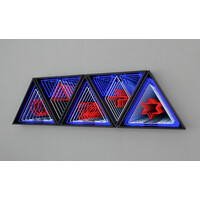
Robert Jahnke
Te Wepu MMXXIII (2023)
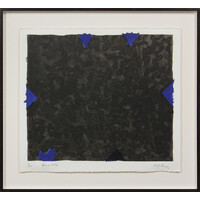
Ralph Hotere
Blue (1998)
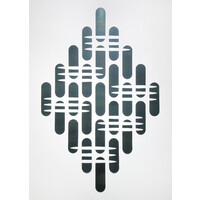
Russell Moses
Resonation (2026)

Ralph Hotere
Aramoana Landscape I (1980)

Russell Moses
Moon Pool (2021)
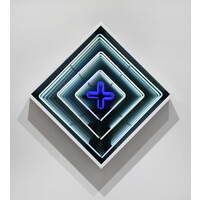
Robert Jahnke
Pātikitiki Mā (2022)
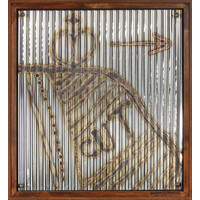
Ralph Hotere
Oputae (Cut) (ca. 1992)

Russell Moses
Southern Cross (2024)
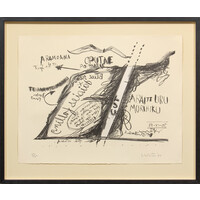
Ralph Hotere
Oputae (1989)
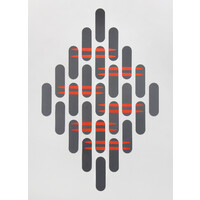
Russell Moses
Beacon - Port (2024)

Ralph Hotere
La Mort a les Couleurs du Paon (Death Wears the Colours of a Peacock) (1985)
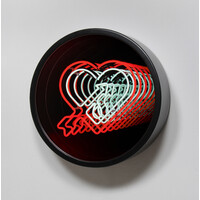
Robert Jahnke
Te Wepu Kōpio (Manawa) (2023)

Russell Moses
Dawn (2024)
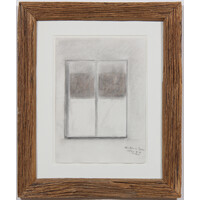
Ralph Hotere
Window in Spain (1978)
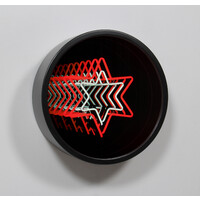
Robert Jahnke
Te Wepu Kōpio (Whetū) (2023)
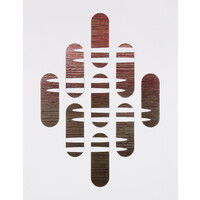
Russell Moses
Rosy (2024)
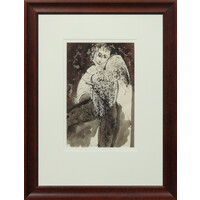
Ralph Hotere
Song Cycle Drawing
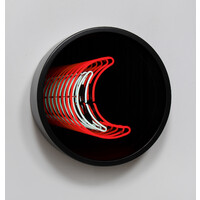
Robert Jahnke
Te Wepu Kōpio (Marama) (2023)
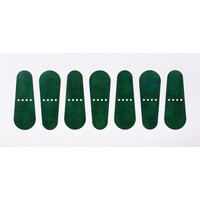
Russell Moses
Whareakeake - Tideline II (Ebb and Flow) (2009)
Exhibition Text
One cannot live in New Zealand long, or even visit the country, without being overawed by the sense of the land as a spiritual presence with its own personality and character.
From the first Māori arrivals to the latest migrants, a connection with the land is inevitable. In the case of the first arrivals, it was strong enough for them to refer to themselves to this day as Tangata whenua, people of the land, an unbreakable connection with nature forged in Te Ao Mārama, the world of light. Later arrivals have also felt this oneness with the surrounding grandeur and the strength of the country and its light on the imagination. The primordial nature of the land seemed a living embodiment of the creation of light over the darkness, a flickering flame of colour over the physicality of the land.
Arguably New Zealand's most important modern artist, Ralph Hotere, felt this connection deeply. Much of the artist's oeuvre is based around the light shining across the blackness of the void. Though originally of Muriwhenua birth, the artist's deep connection with his chosen home overlooking Otago Harbour pervaded his life and work. Hotere took the 1993 extension of Port Otago and the razing on part of Observation Point less as the destruction of a hill and more as a personal wound which would never heal. His works on the subject, such as Oputae, use the deliberate irony of architectural drafting as their basis, capturing the hard, clinical blackness of the plan. In the case of his corrugated iron works this solidity is contrasted with the brilliant reflectiveness of sun on the harbour waters. In paper works such as Aramoana Landscape I, metallic paint provides a similar shimmer, here with the extra meaning of refined aluminium. In La Mort a les Couleurs du Paon, the artist takes Jean Giono's evocative saying and expresses the dichotomy of blackness and colour through the use of colour names arching a literary rainbow over the sacrificial heart.
Russell Moses, a friend of Hotere's who also looked on the great man as an occasional mentor, has also used this interplay of reflective brilliance and dark solidity repeatedly throughout his career. In elaborate geometric arrays such as Southern Cross, light is captured as a rippling surface glow, redolent in the colours of nature, which alters as the viewer moves around them. The pieces become transformed into fully three dimensional works by this interaction of light and viewer. Elsewhere, such as in Whareakeake - Tideline II (Ebb and Flow), the light seems to surge up from deep interior depths, giving a velvet-like feel to the soft lustre of the array. In many of the works, two- and three-note "chords" — flat oval discs of colour — play across the surfaces, breaking up the tension of the light. The allusion to music is deliberate, and another link with Hotere, who often made references to music in his own work, perhaps most notably in the Thelonious Monk-inspired Round Midnight works.
If Moses' works create three-dimensionality via muted internal glow, Robert Jahnke's send that depth spinning into infinity with his neon and mirror installations. Using the traditional Māori palette of red, white, and black, these hypnotic pieces capture an inner space that reflects the open depths of the land. As with Moses, nature is simplified into geometric arrays, glimpses through which we can view eternity. There is connection with Hotere, too, most clearly in the latter's black and fluorescent tube collaborations created with Bill Culbert. More specifically, the pieces relate to the flag of Māori prophet Te Kooti, Te Wepu, which used the five symbols of cross, crescent, star, bleeding heart, and mountain. The pieces seem to capture the words of the prophet breaking free from the depths to illuminate the darkness. Though Jahnke's work moves into a realm of abstraction seemingly farther removed from pure nature, the spiritual presence in these works is no less apparent than in the most photorealistic of landscapes.
Between these three artists the strength of the land, the shimmering light on the land, and the spirituality of the land are depicted as a holy trinity of complementary emotions made flesh.
Presented in partnership with Te Kano Estate.

All images and text copyright © 2026 the Artists & Milford Galleries Ltd.