Mike Crawford Exhibitions
Artists
Exhibition Walkthrough
Exhibition Works
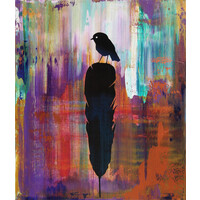
Chris Heaphy
Fall Into You (2025)

Chris Heaphy
It's in Your Making (2023)
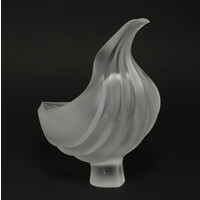
Mike Crawford
Toroa (Manu Marama) (2025)
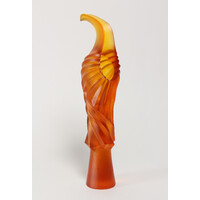
Mike Crawford
Kawau (Manu Rā) (2025)
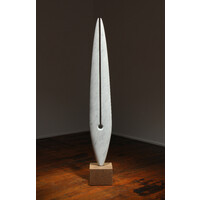
Johnny Turner
Plume (2026)
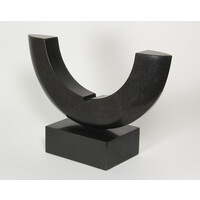
Johnny Turner
Perch - Pae Manu (2026)

Chris Charteris
Bird Form (2020)

Chris Charteris
Kaitiaki (2018)
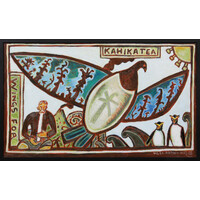
Nigel Brown
Wings for Kahikatea (2023-25)

Nigel Brown
Ponga II (2017)
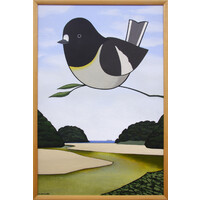
Don Binney
Petroica, Mill Creek (2001)
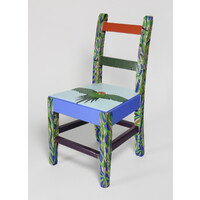
Don Binney
Pae Kakariki (Venture Not to Use the Seat - To Catch an Upthrust Parakeet...) (1997)
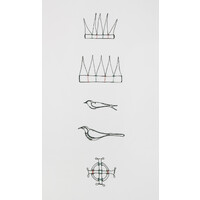
Jacqueline Fraser
Portrait of the Pīpīwharauroa Before the Swallow (1997)

Paul Dibble
The Lost Garden (2023)

Paul Dibble
Huia Sings Alone 1 (2023)
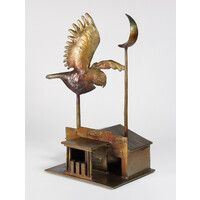
Paul Dibble
24 Hour Service (2005)
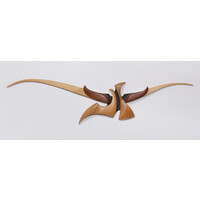
Ross Hemera
Waewae Manu (2010)
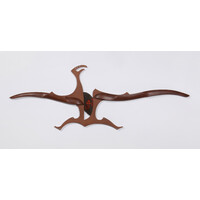
Ross Hemera
Atua Auaha Whenua (2008)
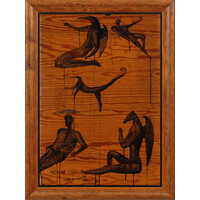
W D Hammond
Pack of Five (3) (1999)

W D Hammond
Shelf Life, Collection Plate, Snuff Jars (1995)
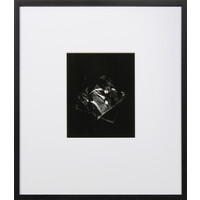
Fiona Pardington
Study for Huia Love Triangle (2004-08)
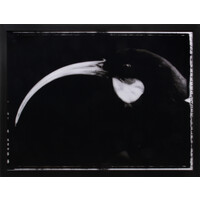
Fiona Pardington
Large Portrait of a Female Huia, Otago Museum (2005)

Lisa Reihana
PELT - Aquila (2010)

Lisa Reihana
PELT - Sabino (2016)

Lisa Reihana
Kurangaituku (2001)

Shane Cotton
Eye (2003)

Roger Mortimer
Rangitoto (2022)

Roger Mortimer
Wainui (2023)
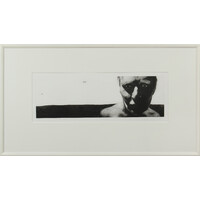
Elizabeth Thomson
The Opunake Home Guard (1985)
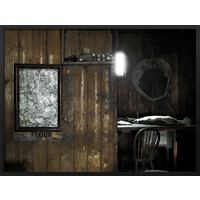
Jane Ussher
Scott's Hut Cape Evans 4 (2008)
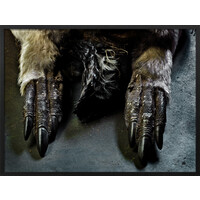
Jane Ussher
Scott's Hut Cape Evans 5 (2008)
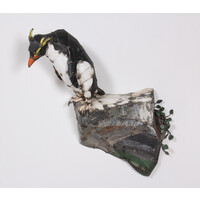
Hannah Kidd
Tawaki Rockery (2025)
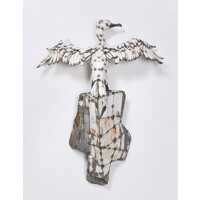
Hannah Kidd
Kāruhiruhi Rockery (2025)
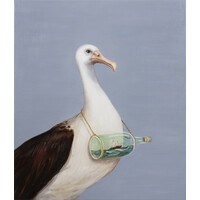
Joanna Braithwaite
Seafarer (2025)
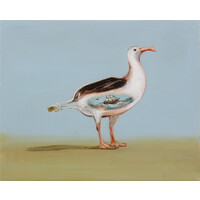
Joanna Braithwaite
Shanty (2025)
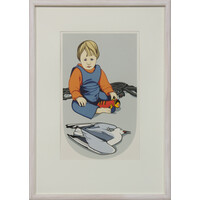
Robin White
Michael at Allan's Beach (1975)
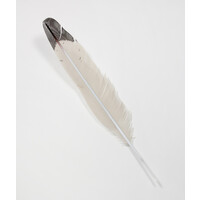
Neil Dawson
Seagull Feather (2022)
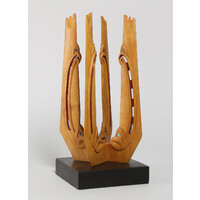
Fred Graham
Taurapa (Stern-posts) (2003)
Exhibition Text
Ka Mua, Ka Muri - Flying Backwards into the Future
Bringing together new major artworks alongside significant historical and contemporary works, Manu Taki explores the enduring role of birds within Aotearoa’s art history. As layered symbols and as both physical and metaphorical conduits, manu are inextricably linked to ideas of place, value, and identity. Simultaneously looking to the past and the future, the exhibition asks not only how we see birds, but what our relationship with them reveals about ourselves; our responsibilities, the stories we tell, and the values we choose to uphold.
Native birds are at the forefront of the artworks of Don Binney, Paul Dibble, Nigel Brown and Fiona Pardington. Rendered monumental in scale, they act as sentinels of both abundance and loss. Binney challenges us to weigh up what we value as New Zealanders, his larger-than-life size Stewart Island robin peers at us from its perch, too immediate to ignore. The recurring image of the huia, seen in works such as Paul Dibble’s The Lost Garden and Large Portrait of a Female Huia, Otago Museum by Fiona Pardington have a commanding presence, evoking the emotional weight of absence. Here, birds become a poignant metaphor for loss, suggesting that what is gone is not only ecological, but also cultural, reflecting our disconnection from the environment and from the responsibilities we hold toward it.
In Te Ao Māori, birds are intermediaries between physical and metaphorical space. Treasured taonga with the ability to exist in “between spaces”, they are regarded highly and often hold the status of guardians, messengers, and harbingers of fate. In Eye, one of Shane Cotton’s key paintings, birds function as spiritual translators, they navigate the space between earth and sky, life and death. Fred Graham’s Taurapa (Sternposts) speaks of belonging, settlement, and protection, and, like Mike Crawford’s cast glass Kawau (Manu Rā) and Toroa (Manu Marama) merges avian forms with architectural elements to create carriers of whakapapa and kaitiakitanga. Embodying whakapapa, Ross Hemera’s carved sculptures invite us to fly backwards into the future - ka mua, ka muri - as birds become contemporary symbols of the connections between sky and earth, past and future, spirit and physical world, and people and their environment. Chris Heaphy also places this challenge in the immediate present. In It’s in Your Making, birds collapse time, simultaneously referring to the past while navigating the future, acting as guardians of cultural memory across time and generations.
Inspired by early rock drawings, Hemera and Chris Charteris remind us of a time when birds far outnumbered humans, much like Bill Hammond’s imagined “Birdland” in Pack of Five (3). Hammond’s Shelf Life, Collection Plate, and Snuff Jars reflects on the colonial impulse to collect and preserve artifacts, while also asking how we protect what remains - these birds are not for ornithological collectors, but watch us, witnessing in silent judgement. Roger Mortimer and Joanna Braithwaite echo this avian gaze, confronting the impact of European colonisation on Aotearoa New Zealand. In Braithwaite’s Seafarer, an early settler’s boat hangs as a trinket on the breast of a Royal Albatross, recalling how both bird and vessel once navigated the same waters. Mortimer explores colonisation, the human condition, and morality through mythological scenes set within familiar New Zealand coastlines in Wainui.
Lisa Reihana explores themes of myth, power, and betrayal in Kurangaituku. Confronting and unsettling, the work visualises a narrative in which violating the guardianship of the natural and spiritual world carries grave consequences. It asks, are we the betrayed, or the betrayers? Or is the social, cultural, and environmental identity asserted by New Zealanders itself a constructed myth, one that reveals our failure to uphold the very values we claim to embody?
Across cultures, generations, and media, Manu Taki explores birds as symbols of identity, memory, and responsibility - as a mirror in which we can see ourselves.
Presented in partnership with Te Kano Estate.

All images and text copyright © 2026 the Artists & Milford Galleries Ltd.