Past Exhibitions
Exhibition Works
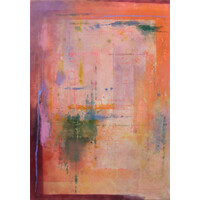
Floor Painting #21 (2025)
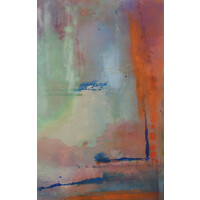
Floor Painting #11 (2024)
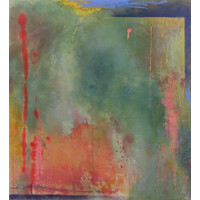
Floor Painting #22 (2025)
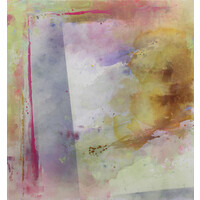
Floor Painting #27 (2025)
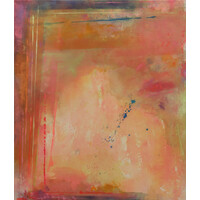
Floor Painting #13 (2024)
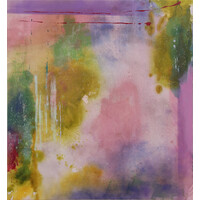
Floor Painting #19 (2025)
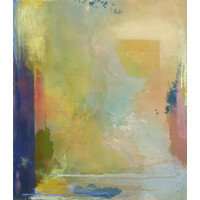
Floor Painting #24 (2025)
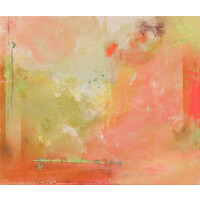
Floor Painting #18 (2025)
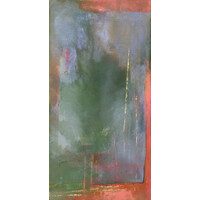
Floor Painting #17 (2025)
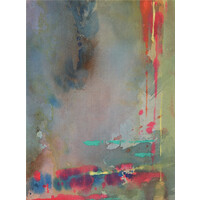
Floor Painting #3A (2024)
Exhibition Text
Amanda Gruenwald's large abstractions are fluid, organic explorations of the dynamics of the painting process. The artist's work is a combination of chance, sudden inspiration, and deep contemplation. Her works are dynamic, open-ended expressions of energy through paint, gestural abstractions at the boundary of colour field and gestural abstraction.
Gruenwald's latest exhibition marks a change of direction, though one which expands her previous canon in a surprising yet entirely logical way. If the artist's work is open-ended, it suggests something beyond its borders. In its most prosaic sense, for an artist, this suggests the drop cloths, the easels, and in Gruenwald's case the floor upon which her paintings are created. The random paint marks upon these surfaces have become a reference for the artist's new works, a corpus which "elevates the incidental, through a process of intuitive reflection and deliberation."1
Exploring the random patterns created as a side-effect of previous painting, the artist has found an inspiration which acknowledges her past work while extending her practice in a new direction. The accumulation of residual marks have to an extent become an effective postmodern expression of the activity of painting, a breaking of the fourth wall that separates the finished image from the process of creation. The artist understands the presence of painterly language and visual grammar in the random marks, discovering her own painted vernacular and developing her own visual grammar through "looking and doing".2
The resulting works are softer and more muted than the paintings for which she is known. Exploring the vestigial marks of spray and acrylic, she has produced images where the marks are more sparse and the paint thinner, allowing the differing textures of different grades of canvas to become a major feature. Working on a horizontal surface has allowed for drips running at tangents to each other; soft geometries created from the overlaying of canvas and spraying of paint. The gentle angular negative spaces of the latter make palpable the historical presence of a now-removed artwork. The floors, and thus the latest canvases, have become palimpsests of an artist's history of work.
1. Artist's statement, 2025.
2. "Amanda Gruenwald: Floor paintings," Trish Clark Gallery, 2024.
All images and text copyright © 2026 the Artists & Milford Galleries Ltd.