Ben Pearce Exhibitions
Exhibition Works
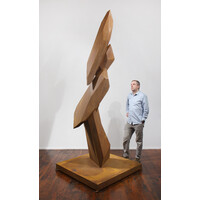
ARLOS (2025)
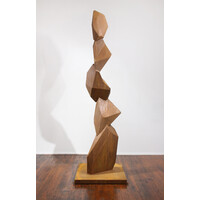
LAJK (2025)
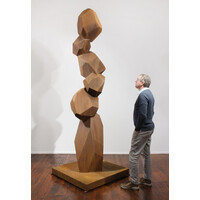
KALM (2025)
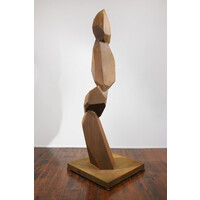
TYIN (2025)
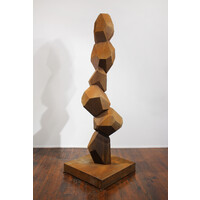
MOON (2025)
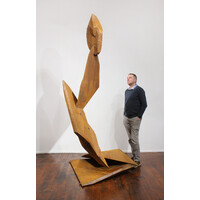
SAJK (2025)
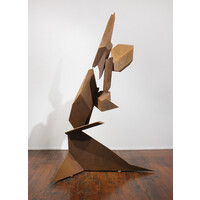
HYRN (2025)
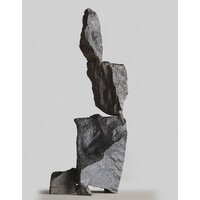
Sensing Night Falling (2025)
Exhibition Walkthrough
Exhibition Text
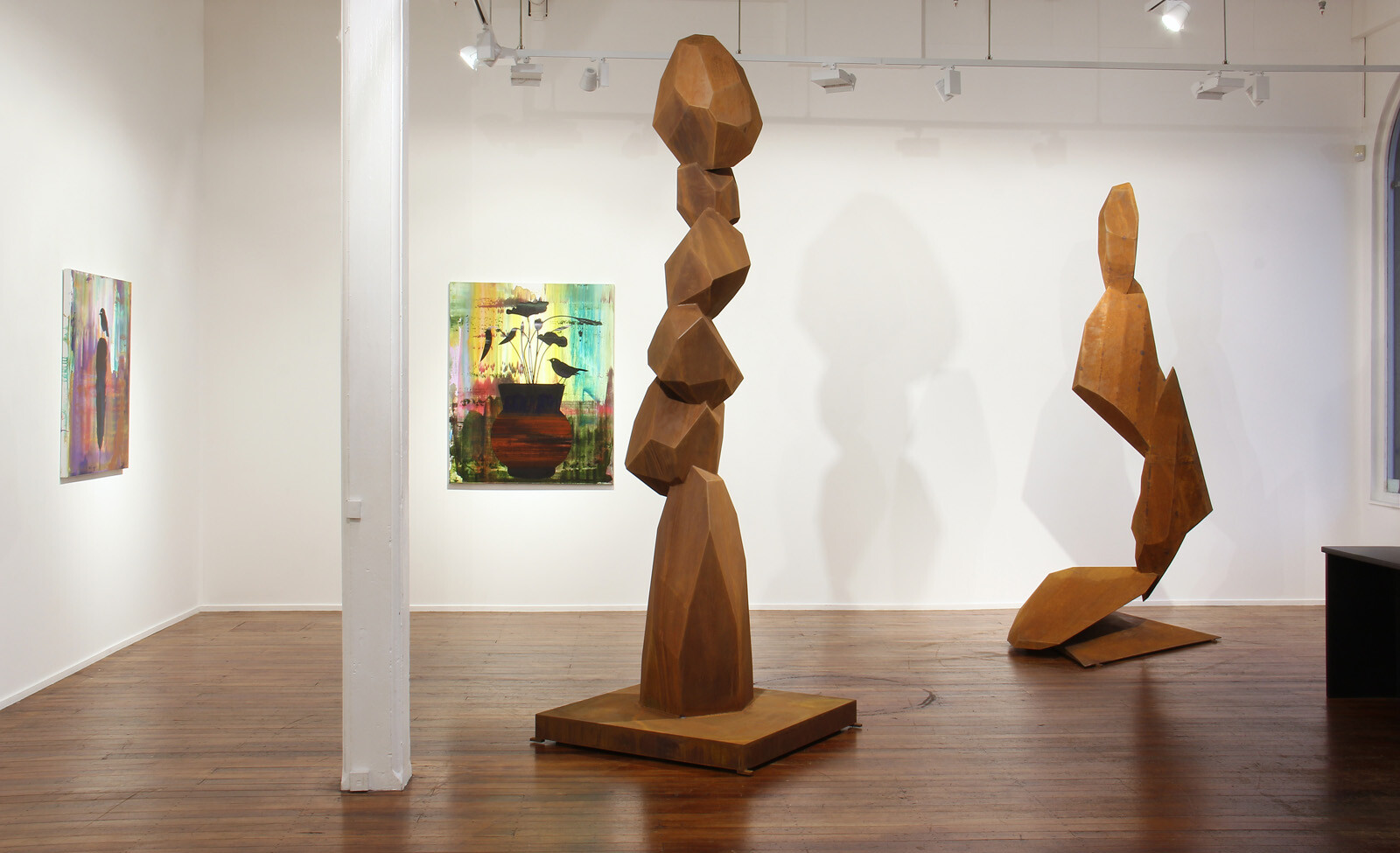
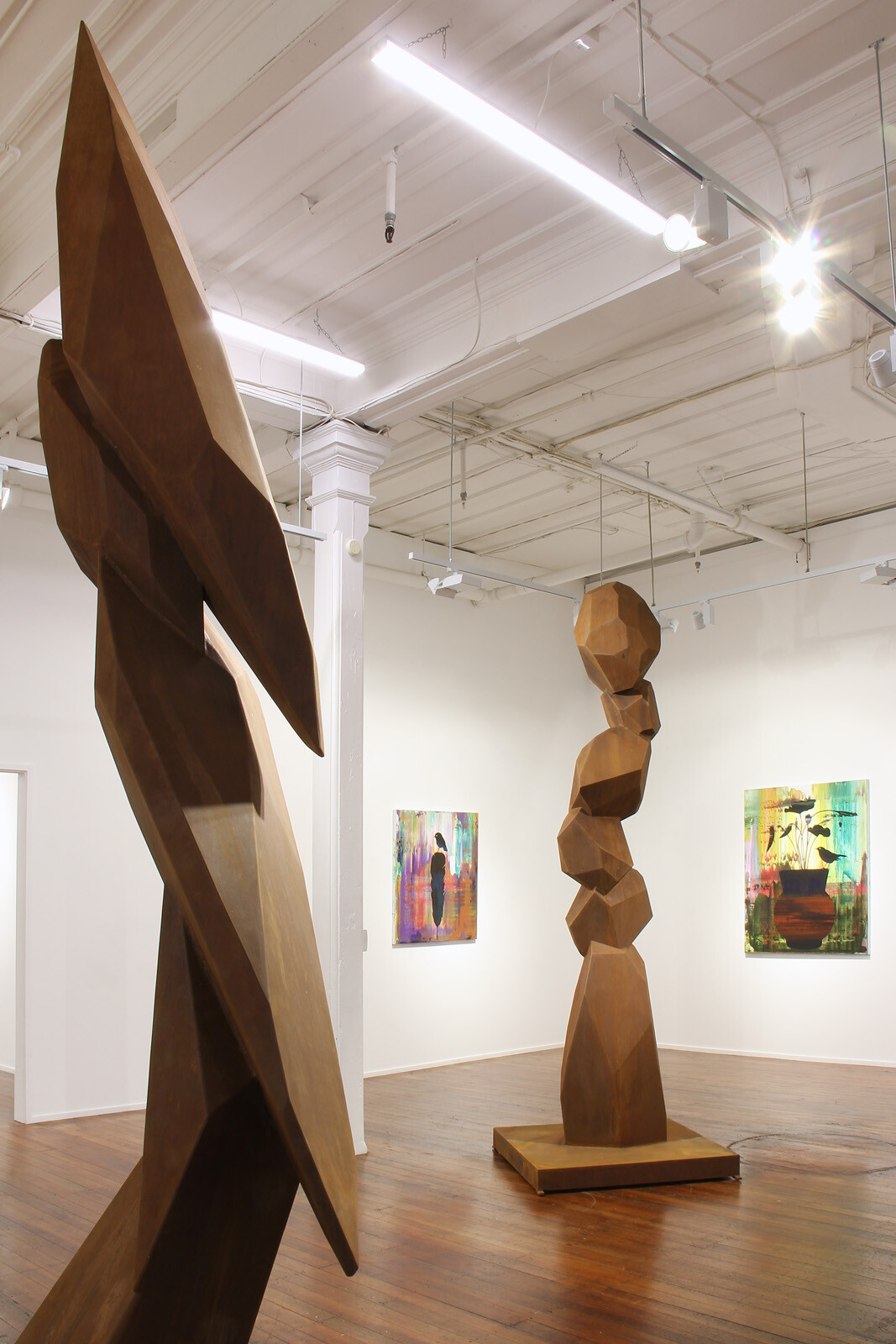
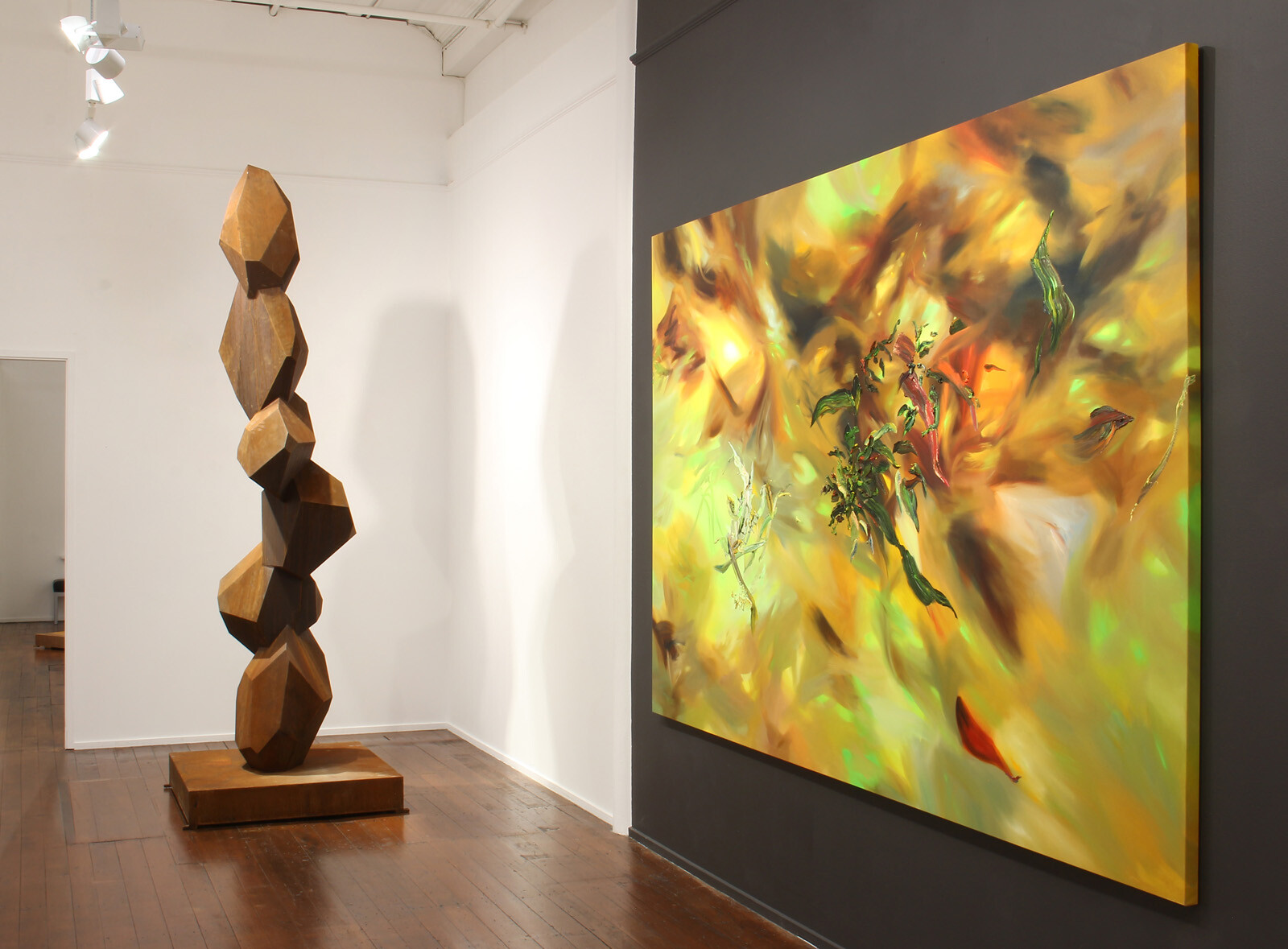
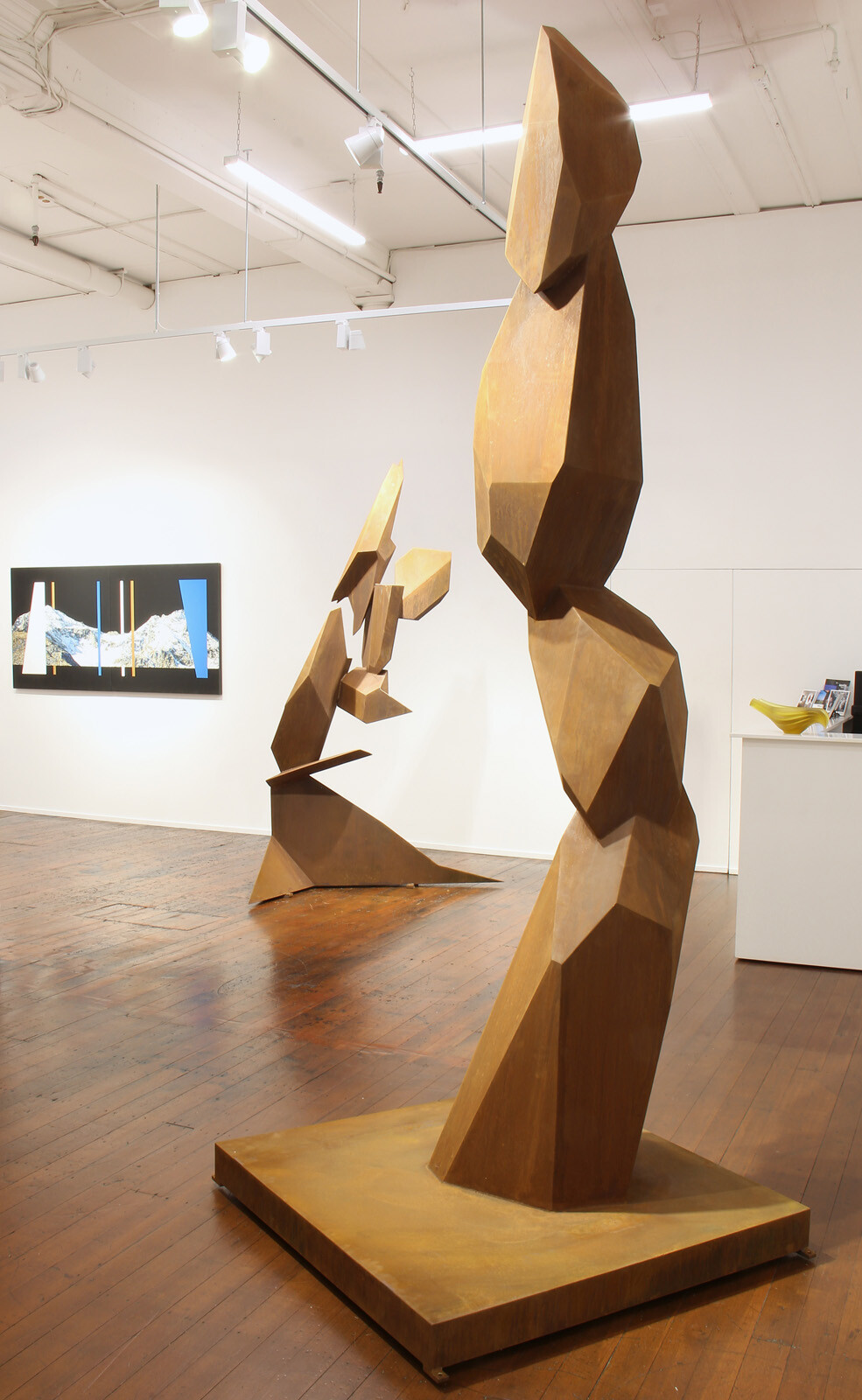
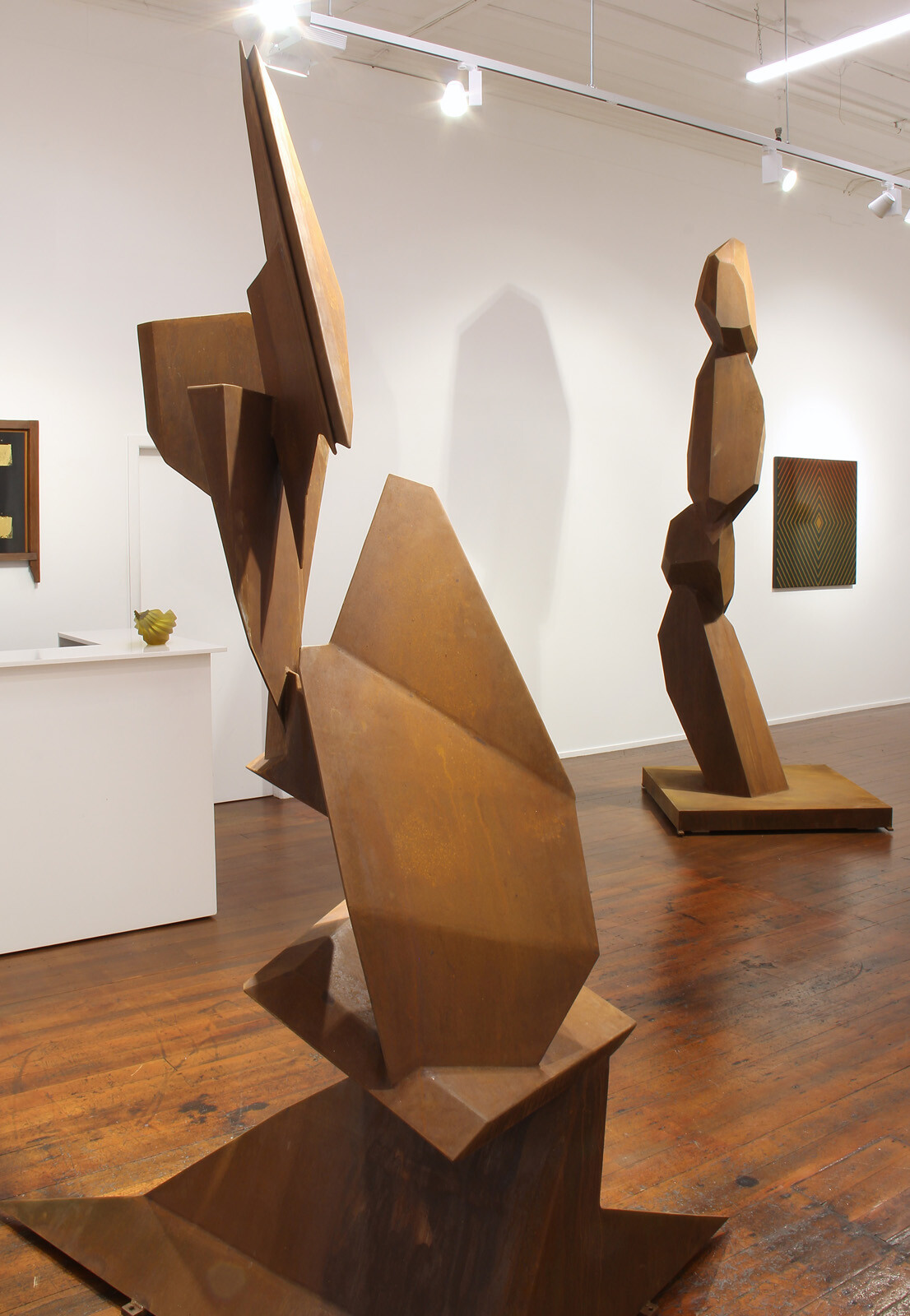
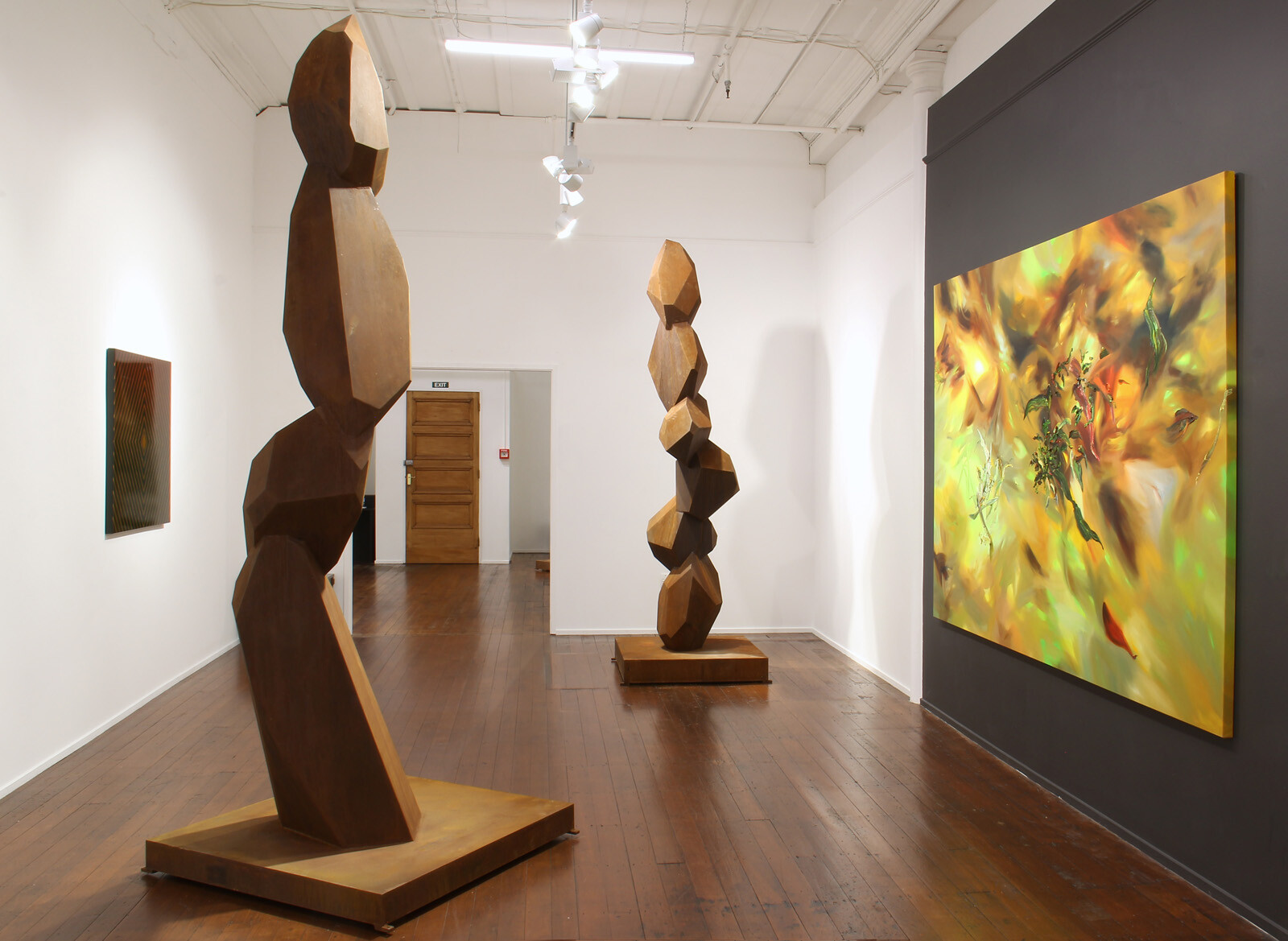
Ben Pearce's large-scale sculptures celebrate nature, its strength, and its delicate balance. The boulder-like sections of his towering forms seem tethered to the firmament yet soar into the air like the supports of some natural colonnade, the deep earthy sienna seeming to weep at the maltreatment of the environment. They seem to shift and turn as we move around them, giving them a sense of animated presence. Shapes and concepts emerge and disappear as the forms interact with the space around them.
While clearly composed of metallic rock forms, there is a duality to Pearce's constructions. In forms such as KALM and LAJK the boulders become vertebrae, the individual articulations of our spines. The artist deliberately uses our natural tendency towards pareidolia, the perceptual phenomenon of seeing faces and other human forms in inanimate objects. His sculptures become "giants, beings, or energies. Ones that could protect or be on guard in the landscapes they might find themselves in." 1 The artist is fascinated by this seeming duality, of the separation but interconnectedness of the natural and human worlds, and of the animal world with the bare earth.
Pearce also is fascinated with the forms of rocks themselves. Whether a pebble in an urban environment or a colossal mountain boulder, each individual stone "seems to be as unique as a person, with its personality, shape and evidence of breaking away from a larger entity." 2
Two of Pearce's works are more experimental, the supple spines being replaced by more angular collections of hard-faced blocks. There is a sense more of the mechanical than the organic; these are, perhaps facets of secondary creation, formed by the more human sculptures, much as we make our machines and buildings. In HYRN there are mesmerising hints of grinding mill-stones or the platens of old printing presses.
Pearce's sculptures are made from Cor-ten, a form of refined steel created for its corrosion resistance and tensile strength. Cor-ten forms a stable outer rust layer, which creates an attractive patination. Exposure to the elements gently alters the rust over a long period, causing thin rivulets to appear on the surface. Pearce has pre-soaked the totems in streams of water for a considerable time to create the lush tangible surfaces of his sculptures. The work will continue to adapt and change its skin to its surroundings, becoming a living, breathing item.
These Brancusian forms are referred to by the artist as totems, an apt term considering that they seem imbued with spiritual significance. There is an awareness by the artist of the intrinsic link between rock and human prehistory, from its uses from tools to markers for ceremonial sites. The columns might equally be thought of as fetishes, or even as golems - animated forms created as if by magical means from the materials of the earth. As such, they are a reflection of creation myths, from the Bible to Frankenstein, in which the breath of life is imparted to the very minerals of the earth. We are reminded of the dichotomy of our human vulnerability and inner strength, as both children of the world and as its kaitiaki, and by analogy we are reminded of those same features in nature and the environment at large.
1. Artist's statement, May 2025.
2. Ibid
Exhibition Views






All images and text copyright © 2026 the Artists & Milford Galleries Ltd.