Past Exhibitions
Artists
Exhibition Works
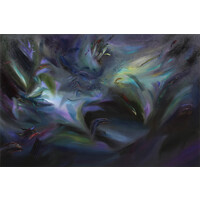
Molly Timmins
Bromeliad Garden Nightscape (2025)
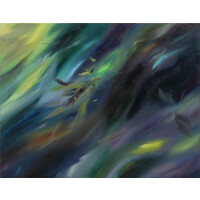
Molly Timmins
Nurturing Soil (2025/26)
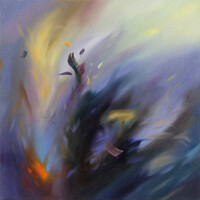
Molly Timmins
Ripe Leafing (2025/26)
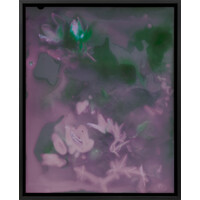
Kate van der Drift
Ulex Europaeus (Gorse) (2025)
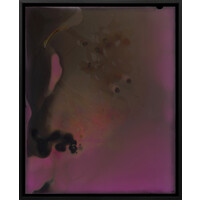
Kate van der Drift
Solanum Mauritianum (Woolly Nightshade Berries) Positive (2025)
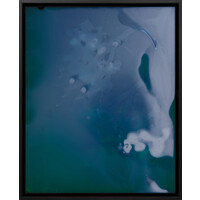
Kate van der Drift
Solanum Mauritianum (Woolly Nightshade Berries) Negative (2025)
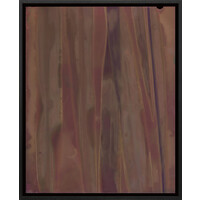
Kate van der Drift
Paspalum Urvillei (Vasey Grass) Positive (2025)
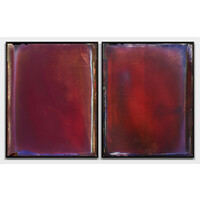
Kate van der Drift
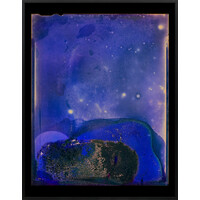
First Quarter Moon to Full Moon, May, 36°55'52.9"S 174°51'54.1"E (Tāmaki Estuary) (2020)
Kate van der Drift
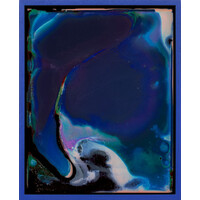
New Moon to New Moon, August 2019 I, 37°20'33.4"S 175°30'30.5"E (2019)
Kate van der Drift
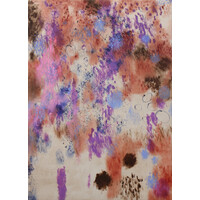
Waning Gibbous to Waxing Gibbous, September 2020 II, 37°17'41.6"S 175°31'35.7"E (2020)
Sarah Smuts-Kennedy
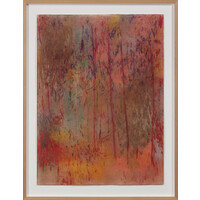
Field Portrait - Jane Campion (2026)
Sarah Smuts-Kennedy
Joy Field - Love Window, 10th May, 2023 (2023)
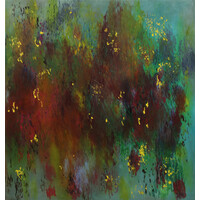
Sarah Smuts-Kennedy
The Leaf Has a Song in It (2025)
Exhibition Text
The works of Molly Timmins, Kate van der Drift and Sarah Smuts-Kennedy explore the connections between nature and culture, the seen and unseen, and science and spirituality, inviting viewers to reflect on how we experience and understand the world around us.
Drawing on Māori cosmology and personal whakapapa, the lush and expressive paintings of Molly Timmins portray gardens as spaces of memory, coexistence and transformation. Central to her current series is the concept of Te Pō; the original night of Māori belief systems which is understood not as emptiness or void, but as a limitless generative realm of beginnings, potential and becoming, where knowledge, lineage and ancestral presence exist before emerging into the world. Timmins’ densely layered and fluid compositions weave together and in works such as Nurturing Soil (2025), literally stich together, endemic foliage, synthetic ornamentation and introduced plant species, creating psychologically charged landscapes that reflect the entangled histories of colonisation and cultural exchange within Aotearoa. Grounded in both her Māori heritage and familial connection to bromeliad cultivation, her paintings consider how identity is shaped through inherited histories, displacement and adaptation. By placing native and imported forms in conversation, Timmins reveals the garden as both a site of beauty and a living record of transformation, hybridity and ongoing negotiations.
Kate van der Drift’s practice evokes a form of magical realism in which the beauty, materiality and mysteries of science are revealed as endlessly hypnotic and transformative. Through experimental photographic processes, she translates the natural world directly onto film, capturing chemical textures and vivid colour with an alchemical intensity. Waning Gibbous to Waxing Gibbous, September 2020 II, 37°17'41.6"S 175°31'35.7"E (2020) and New Moon to New Moon, August 2019 I, 37°20'33.4"S 175°30'30.5"E (2019) examine the fragile ecology of the Hauraki Plains, a landscape radically transformed through colonisation and industrial agriculture. Her site-specific, camera-less “river exposures” are created by submerging unexposed colour negatives in river water for weeks at a time, allowing pollution, sediment, algae and microorganisms to chemically inscribe themselves onto the film’s surface. These durational works become accumulations of ecological trace and transformation, where the rivers themselves act as both subject and collaborator. Continuing this inquiry, for her 2025 botanical works, each plant was placed on large-format silver gelatin film outdoors and developed using the very herbicides and marker dyes designed to eradicate it, producing images of sublime and unsettling beauty that expose the entanglement of nature, culture and conservation.
Using a similarly process driven approach, the delicate works of Sarah Smuts-Kennedy are grounded in an intuitive and deeply responsive drawing practice that privileges sensation, presence and accumulation over fixed representation. Subtle mark-making, translucent layers of pigment and atmospheric fields of colour emerge gradually through repeated gestures, creating surfaces that feel both meditative and emotionally charged. Her works unfold as experiential collaborations between artist, subject and environment, shaped through sustained attention and an openness to chance, memory and subconscious association. In her portrait of Jane Campion, the image develops not from photographic likeness alone but through conversation, encounter and the slow investment of time, allowing meaning to accrue organically through interaction and shared presence. Likewise, the Joy Field works operate as emotional and psychic landscapes; records of lived experience, intuition and interior states that blur distinctions between observation and feeling. Across these works, Smuts-Kennedy foregrounds process as a deliberately contemplative and mediative act, where drawing becomes a means of attunement to both inner and external worlds, inviting viewers into spaces of quiet reflection, intimacy and resonance.
Presented in partnership with Te Kano Estate.

All images and text copyright © 2026 the Artists & Milford Galleries Ltd.