Past Exhibitions
Exhibition Works
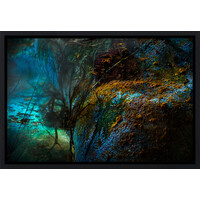
Reef (2015-25)
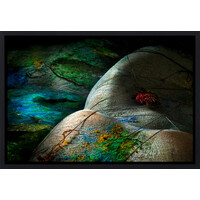
Shoal (2015-25)

Escarpment (The Woods are Lovely, Dark and Deep) (2015-25)
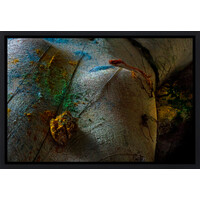
Necklace of Coral (2015-25)

Ravine (2015-25)

Cadence - Cliff Face with Gyre (2015-25)
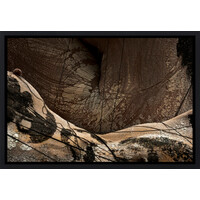
Summit - Chasm - Climax (2015-25)
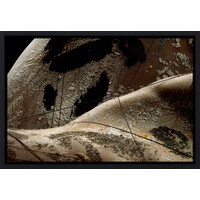
Dune (2015-25)
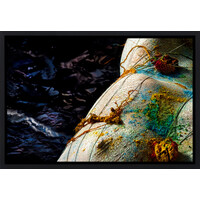
Tangle (2015-25)
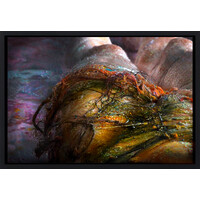
The Flowers Are Heavy in the Brocade City (2015-25)
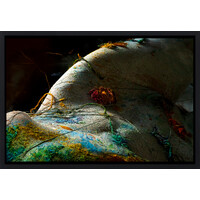
Sea from on an Ocean Floor (2015-25)
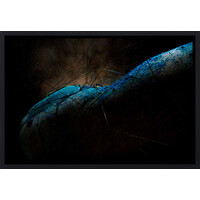
Rain Over the Blue Planet (2015-25)
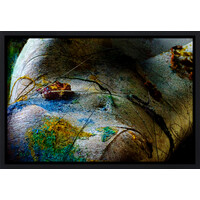
Anemone (2015-25)
Vincent Ward Events
ARTIST TALK AND BOOK SIGNING
Saturday 28 June at Milford Galleries
Artist talk at 3 pm, book signing from 3:45 pm
FILM SCREENINGS
In conjunction with Vincent Ward's exhibition of photographs at Milford Galleries, don't miss two special screenings of his films at the following times and venues:
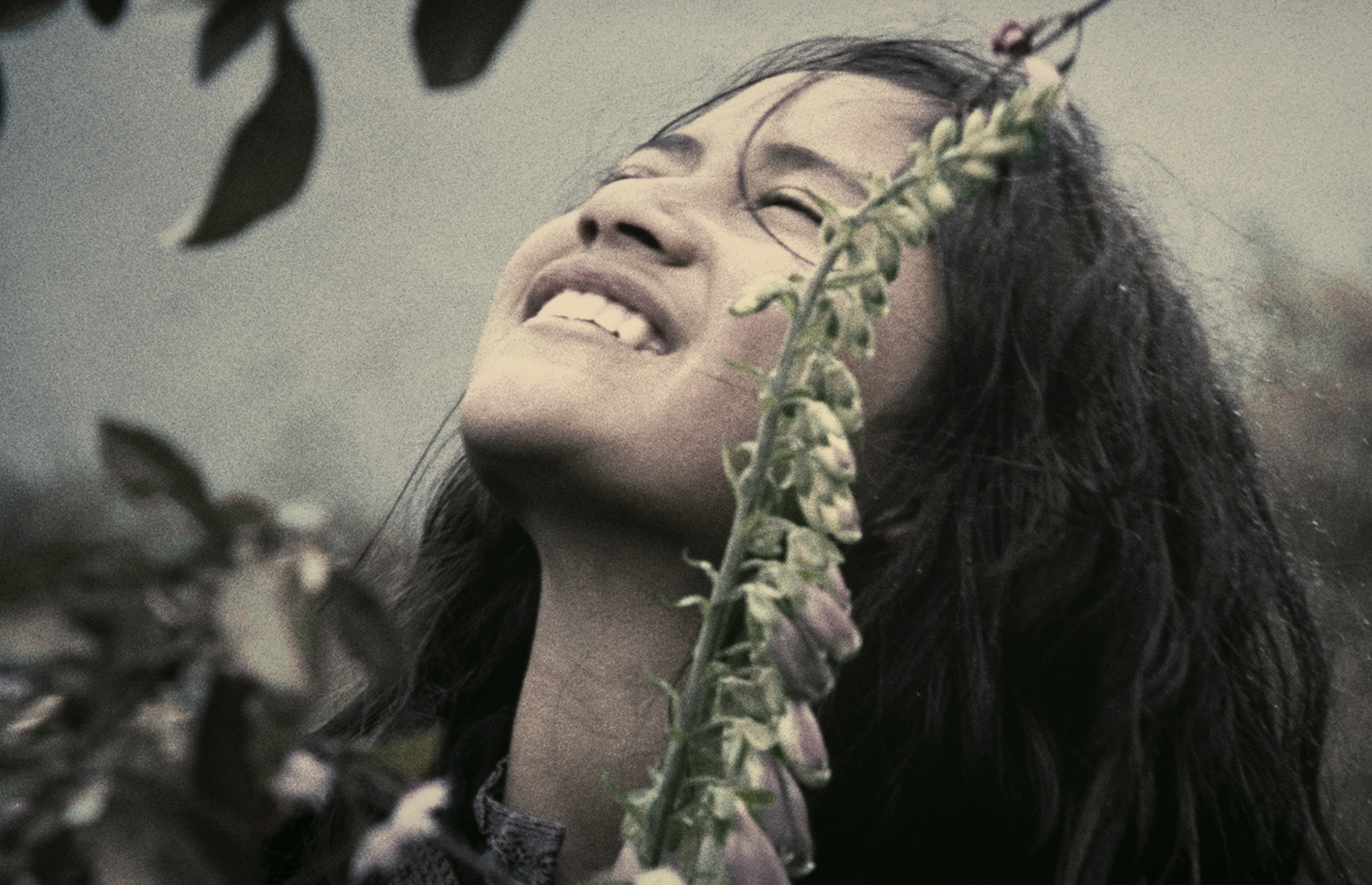
Rain of the Children (2008), 102 min, rated M Mature
Screening at 6:30 pm, Tuesday 24 June at Te Atamira, Remarkables Park, Frankton
This special event will feature a 20 min Q & A session with director Vincent Ward after the screening.
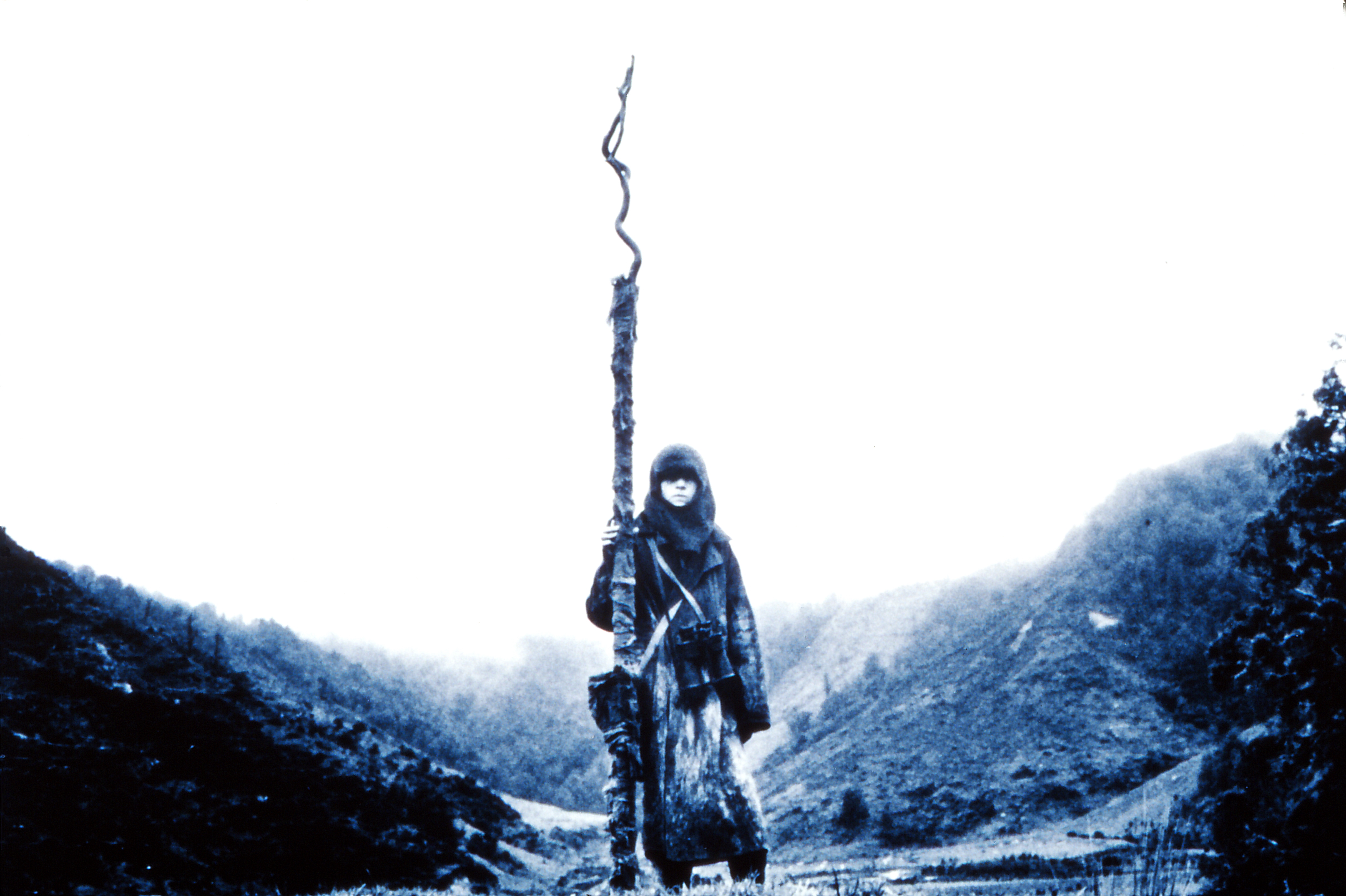
Vigil (1984), 120 min, rated PG (sexual references)
Screening at 5:45 pm, Wednesday 25 June at Dorothy Browns Cinema, Arrowtown
This special event will feature a 20 min Q & A session with director Vincent Ward after the screening.
These events are generously supported by the Central Lakes Art Support Scheme with assistance from Jan Maxwell, Queenstown Lakes District Council.


Exhibition Text
Our bodies are palimpsests - pages which bear the marks of use and reuse, or overwriting and erasing. With each year, the lines of time and the ravages of injury write a different poem on our surfaces, the stories of the previous years superseded, the creases deepened or modified.
So too the lines of the land change: the ancient topographies are eroded and softened, there are wildfires and floods, and the furrows of farming are cut in formerly virgin soil. Major events can disfigure - or refigure - the formerly familiar.
Ward's images are inspired by memories of his father, his war injuries, and his work clearing rough bush hillsides to create farmland. Ward clearly saw an analogy between his father's injuries and the scars created by clearing the land, and the geometrically bordered fields became a personal sanctuary as surely as their clearing was catharsis. As a child, Vincent also experienced his father's deep love for both the contours of the land and for the historical marks that form its psycho-geography. His young life was filled with tales of how people's lives had been shaped by the country just as surely as the country was shaped by the people.1
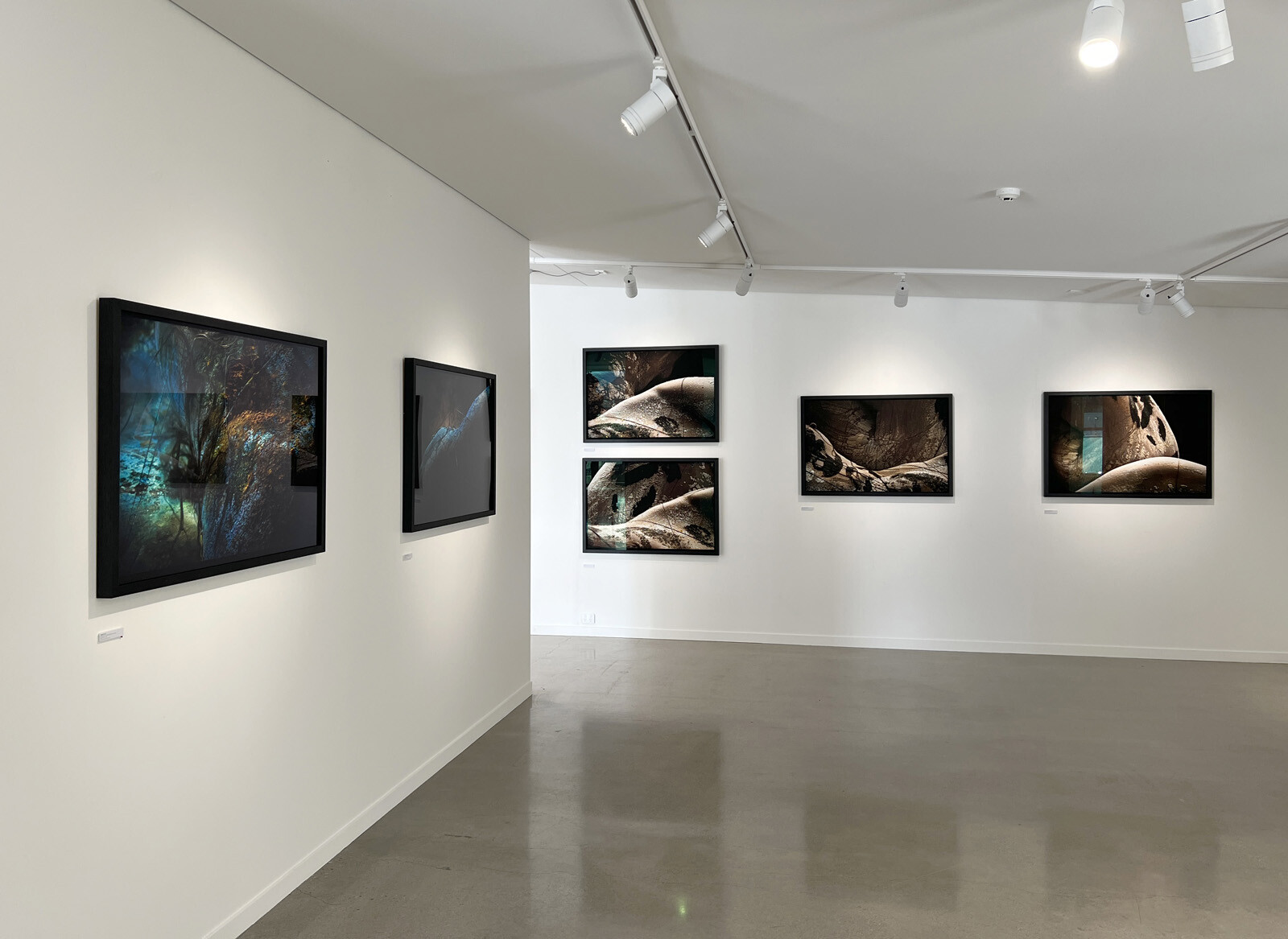
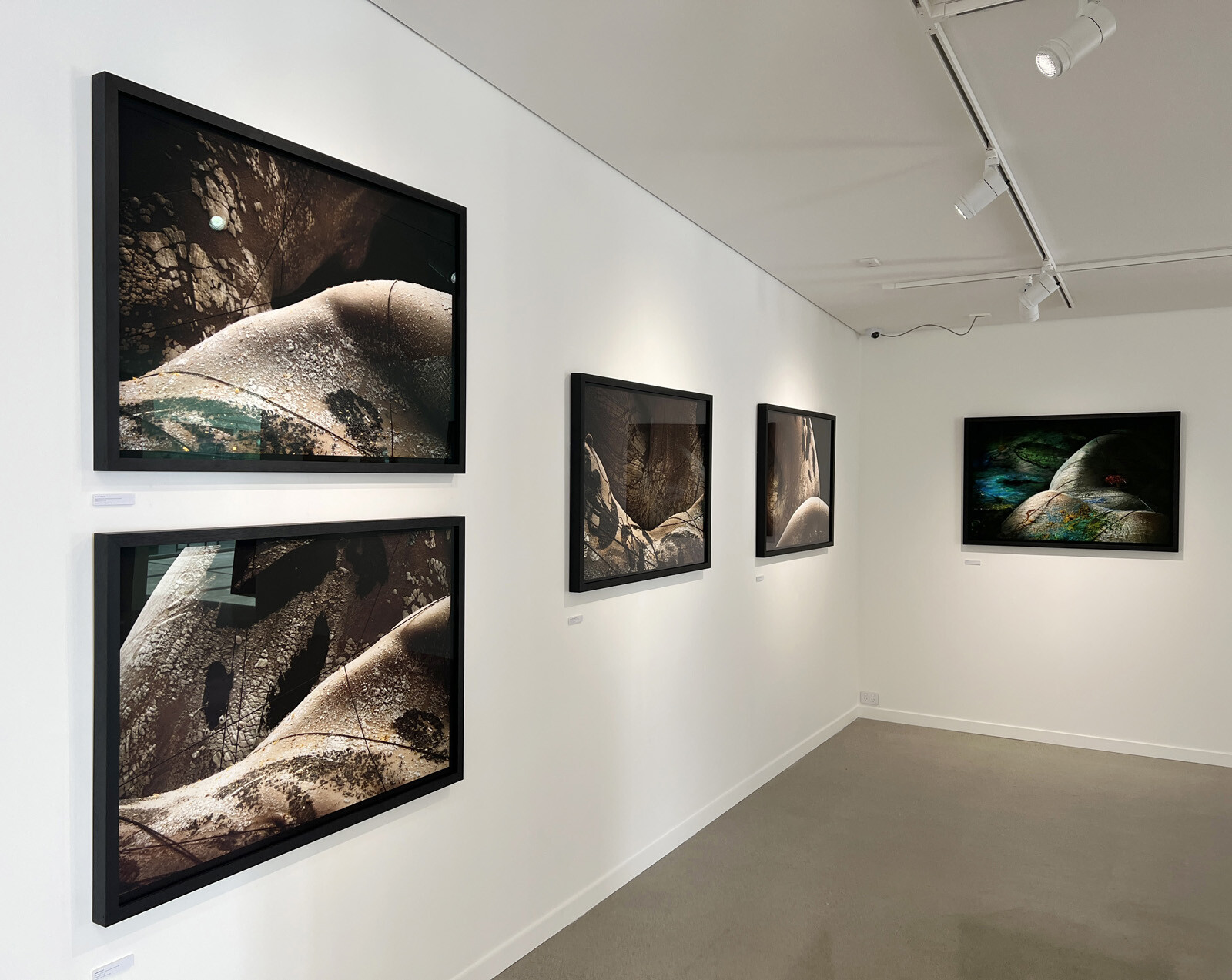
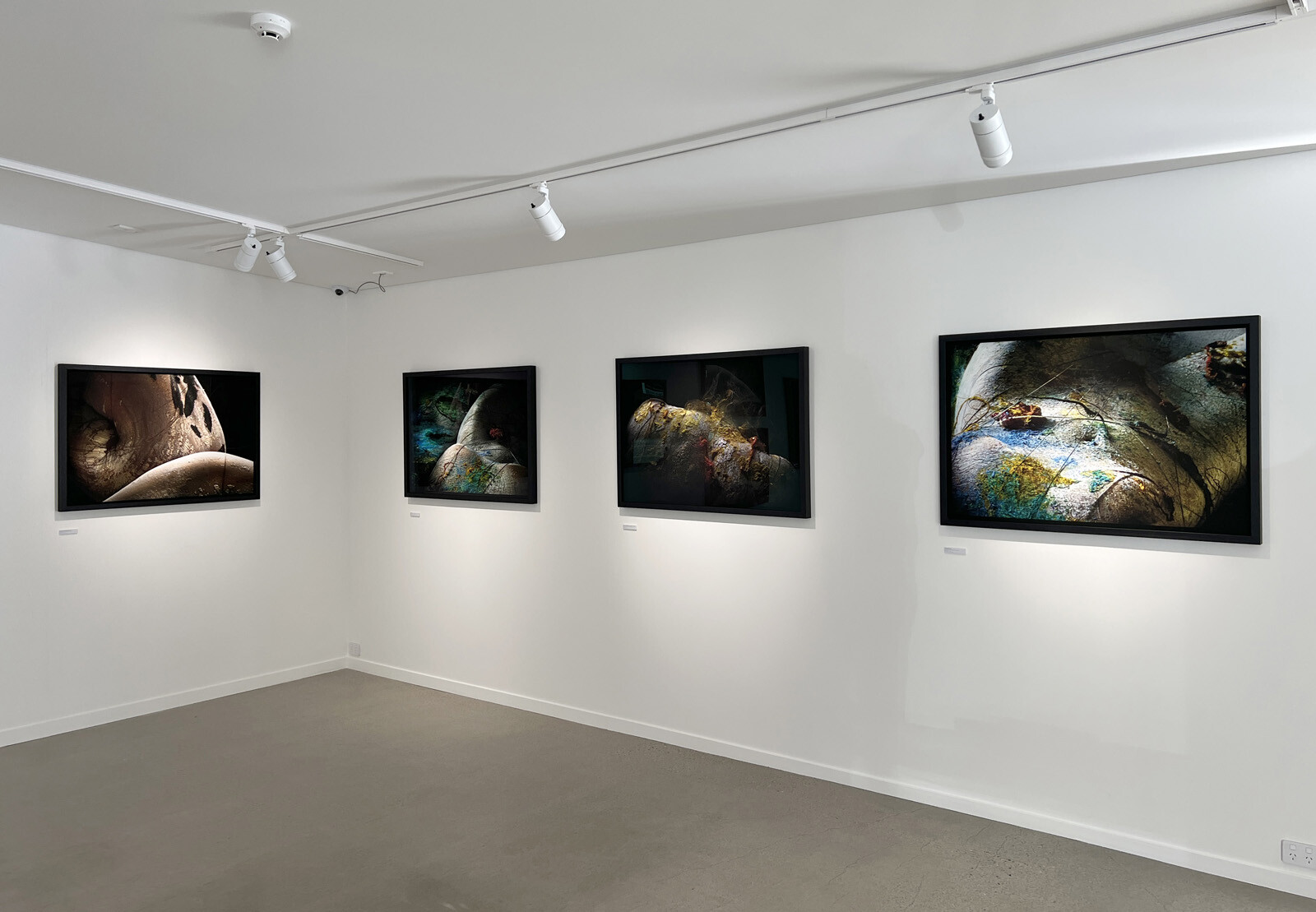
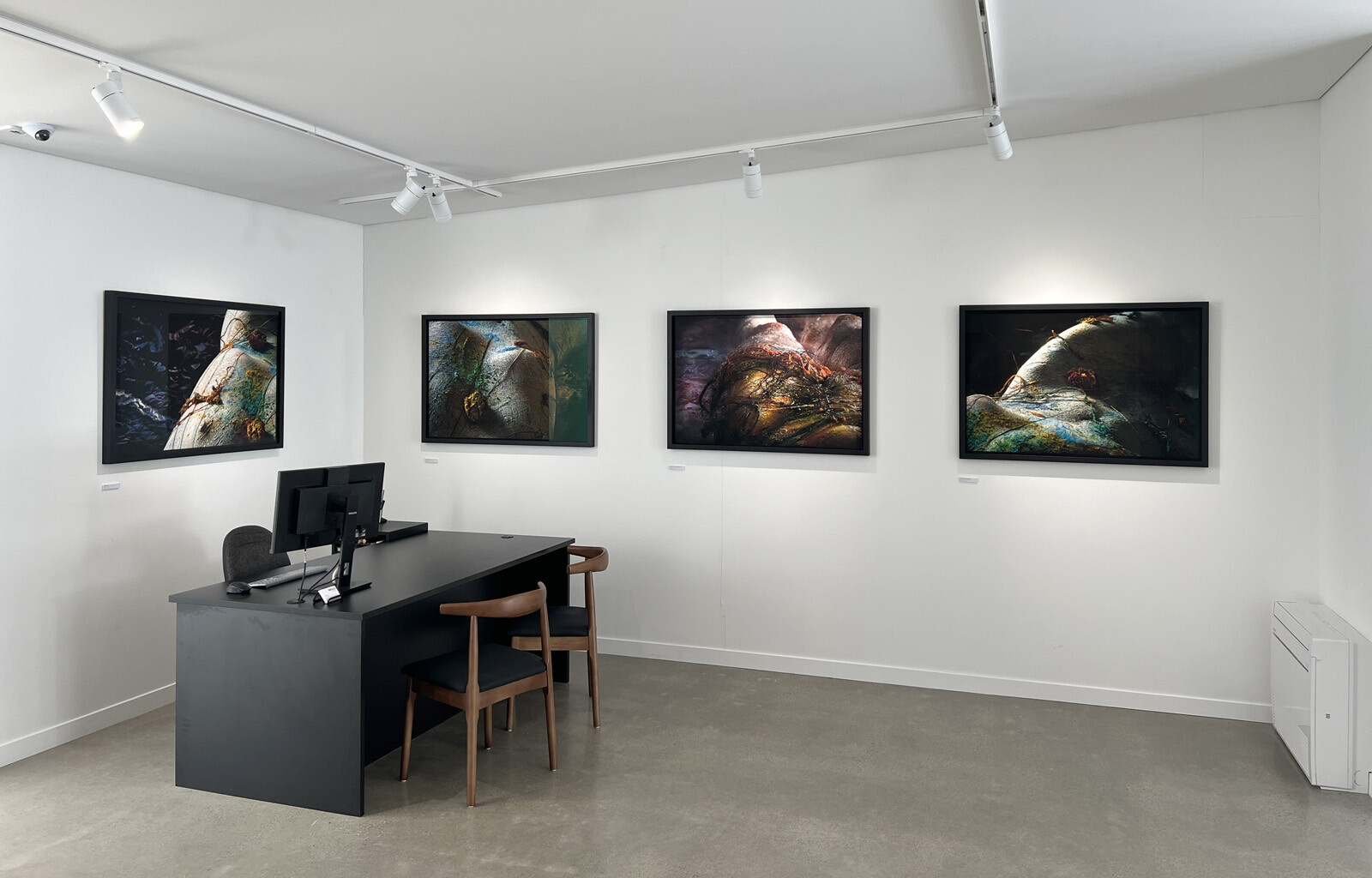
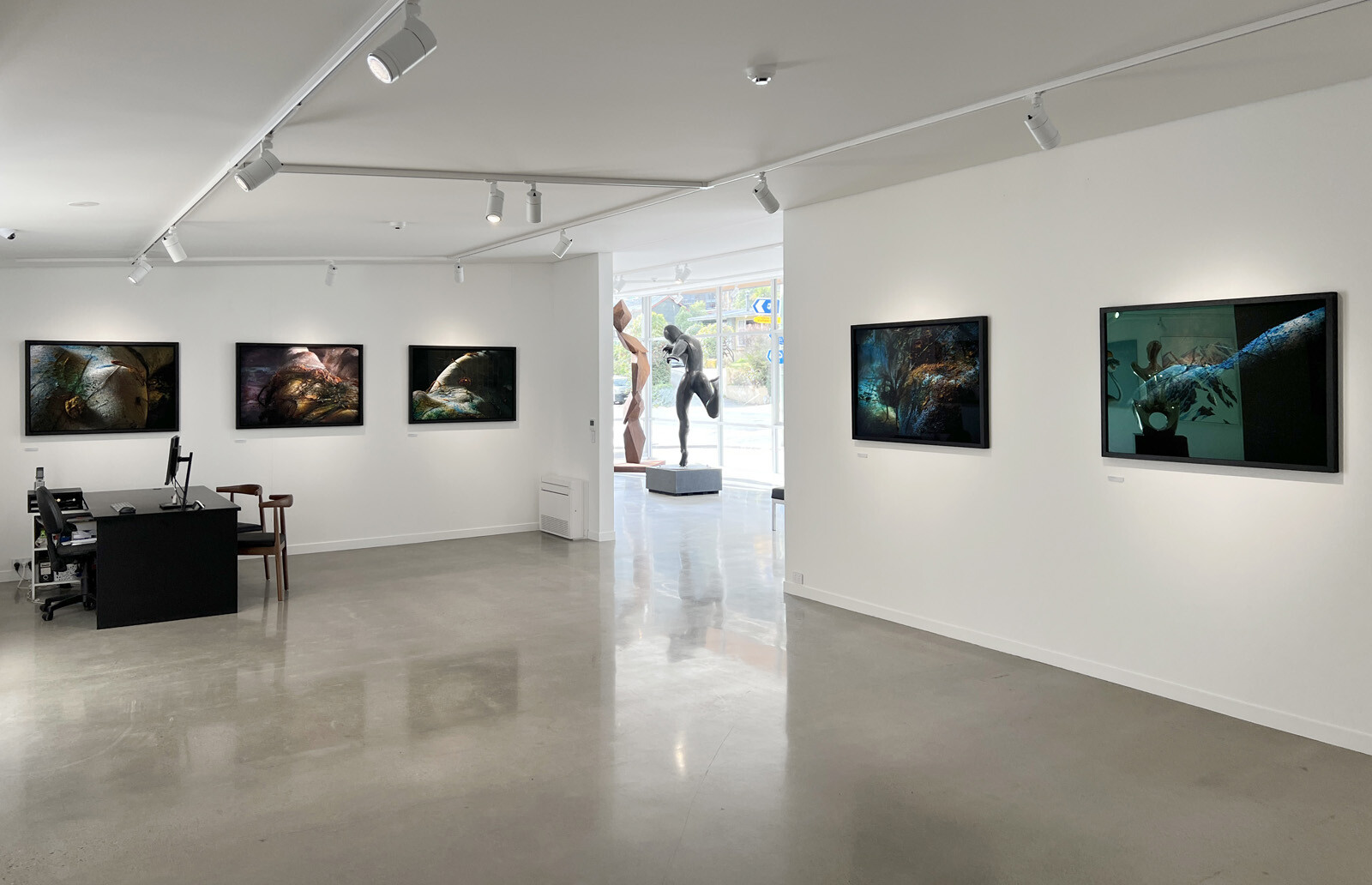
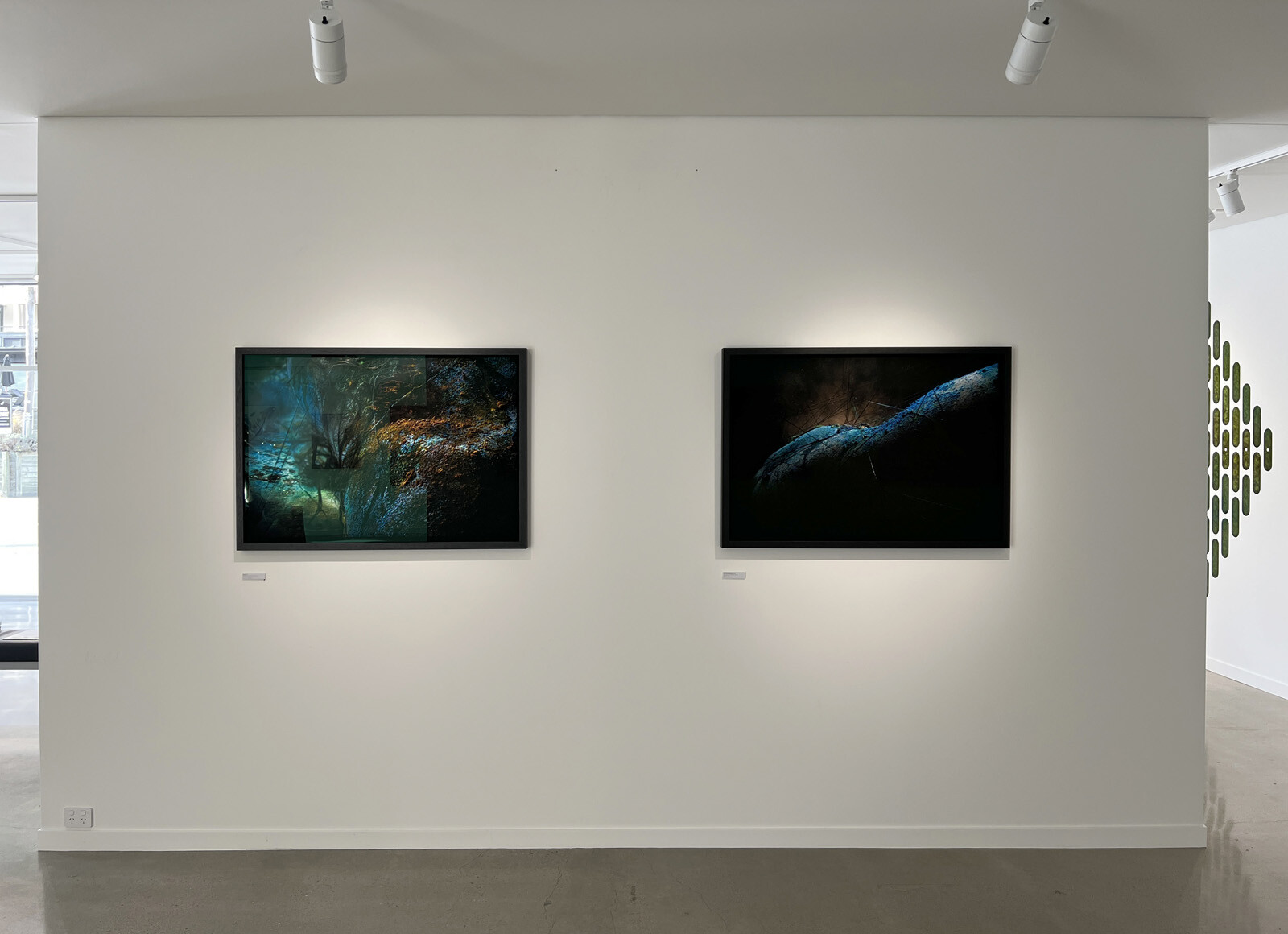
It is this symbiotic reformation that is at the heart of Vincent Ward's Palimpsest. While the works clearly have personal meaning, the results are geographical rather than biographical. Ward engages in a visceral visual language to explore ideas of psychic states and our relationship with the physical world2 creating emotion-charged pieces which directly assault the senses. The human body is used by Ward as his canvas, with the pigments painted onto the models by Ward himself. His images use shoulders, legs and torsos to create the topography of his land, the contours becoming simultaneously studies of the human form and landscape. Ward's deeply lush images are steeped in ambiguity, centred on the human body reimagined as desert, cavern, or ocean depth. Seeing himself primarily as painter rather than photographer, he has used his experiences as an impetus for a celebration of life, producing vivid and breath-taking beauty.
Ward draws heavily from his better-known career in film and cinematography for these works. We are presented with mesmerising vistas adrift in some haunting netherworld. In works such as Reef, the human form almost disappears into the submerged depths. Elsewhere, as in the connected images Dune and Summit – Chasm – Climax, the anatomy of the body is as evident as the dry, dusty land it represents. Analogies with creation myths are clear 3 - this is the Papatūānuku, the Gaia, the Mother Earth from whom we all sprang, and the pigments that consume the works are the tā moko which link us forever to the land through our mythic whakapapa.
The deliberate ambiguities and dualities of the work allows us to read different stories into the works: myth, beauty, fragility, and even the flowing formality of calligraphy. The works become allegories, imagined places, parables, and metaphors — dialogues and journeys across time and culture as much as across colour and form.
1. Artist's statement, 2025.
2. “Vincent Ward: Palimpsest/Landscapes”, exhibition text, Trish Clark Gallery, 2016. Accessed from https://trishclark.co.nz/exhibitions/vincent-ward-palimpsest-landscapes.
3. Sarah McClintock, “Vincent Ward: Palimpsest/Landscapes”, exhibition text, The Suter Art Gallery, 2018. Accessed from https://thesuter.org.nz/exhibitions/2018/6/2/vincent-ward-palimpsestlandscape.
Presented in partnership with Te Kano Estate.

Exhibition Views
All images and text copyright © 2026 the Artists & Milford Galleries Ltd.